Primary Source Documents
The original handwritten documents that tell Jehu's story. Each image is accompanied by its complete transcription, preserving the original spelling, grammar, and formatting.
Click any document image to view it full-size. Click "Read Transcription" to expand the complete text.
Early Conflicts: 1791-1806
First court appearances—establishing Jehu as victim of property crimes
First Court Appearance
Warrant against Caleb Low for killing Jehu's mare. This is the earliest record of Jehu Barnes in Wilkes County court documents.
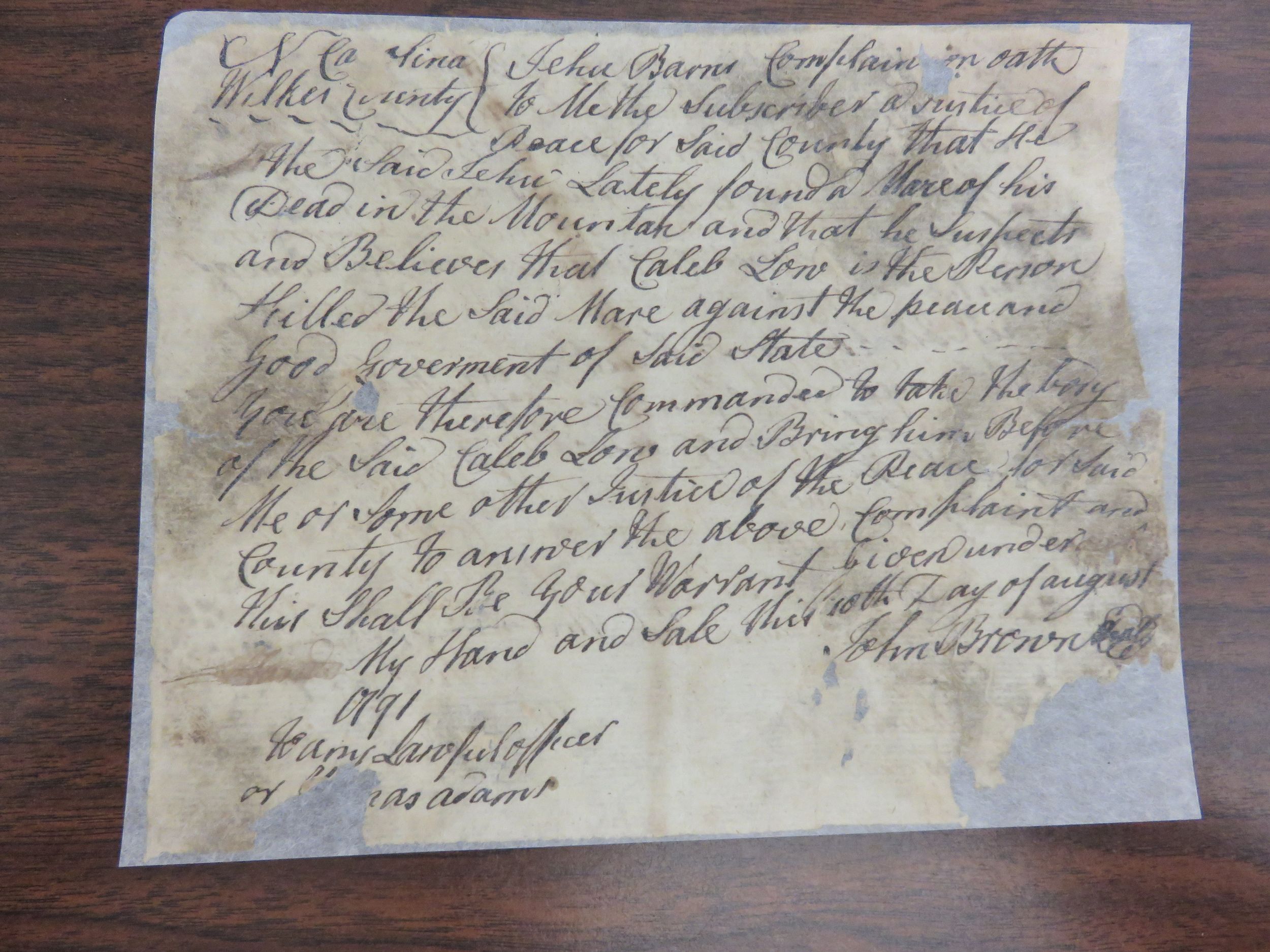
N Carolina
Wilkes County
Jehu Barns Complain on oath
to Me the Subscriber a Justice of
Peace for Said County that He
the Said Jehu Lately found a Mare of his
Dead in the Mountain and that he Suspects
and Believes that Caleb Low is the Person
Killed the Said Mare against the peace and
Good Goverment of Said State
You are Therefore Commanded to take the body
of the Said Caleb Low and Bring him Before
Me or Some other Justice of the Peace for Said
County to answer the above Complaint and
this Shall Be Your Warrant Given under
My Hand and Sale this 10th Day of august
1791
John Brown (Seal)
To any Lawful officer
or Thomas adams
Indictment & "No Bill" (Front & Back)
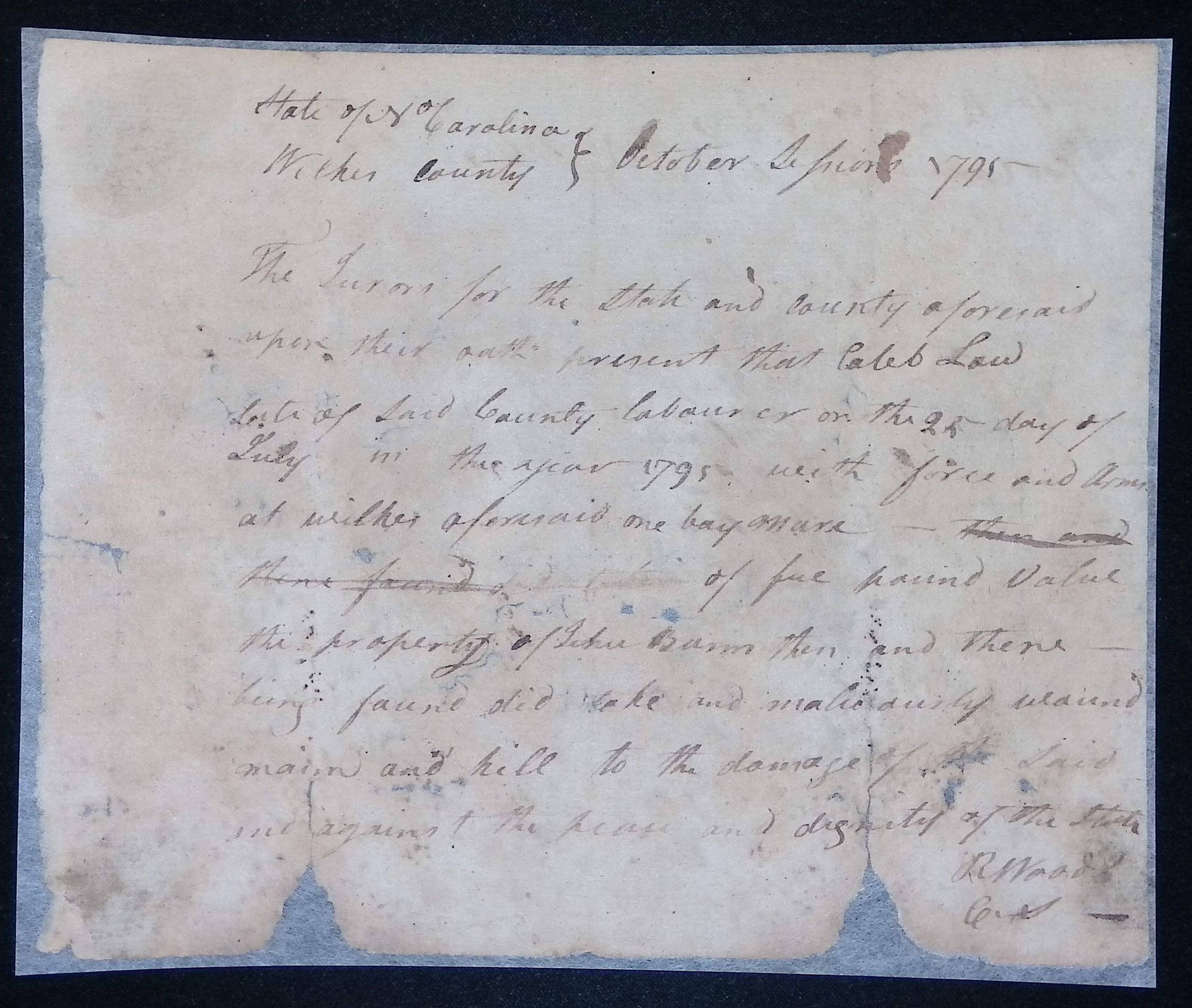
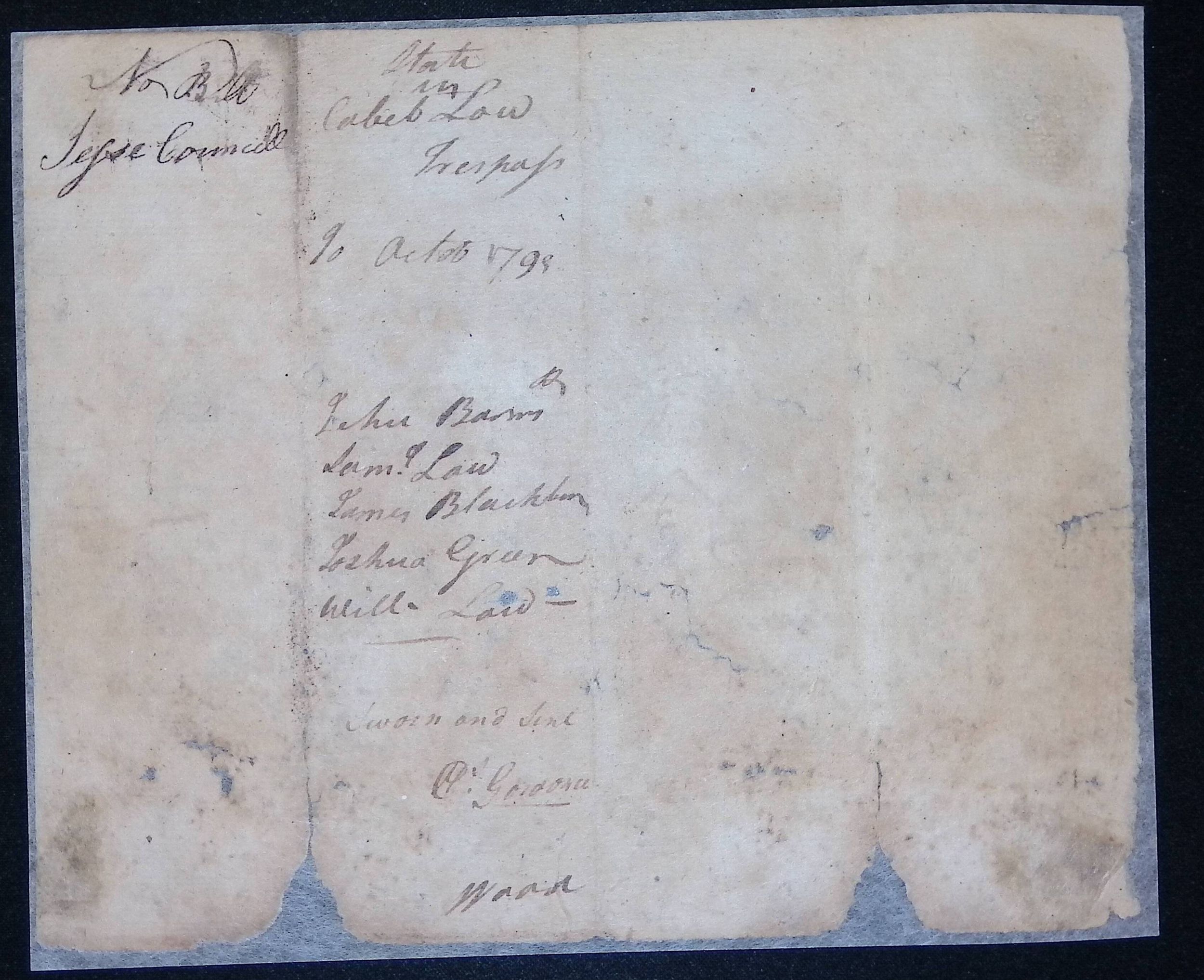
Grand jury indictment against Caleb Low for killing Jehu's mare. Despite five witnesses, foreman P. Gordon marks "No Bill"—case dismissed. Jehu's first experience with justice denied.
[Front - b03f05-6382.jpg]
State of No Carolina
Wilkes County
October Session 1795
The Jurors for the State and County aforesaid
upon their oath present that Caleb Low
Late of Said County Labourer on the 25 day of
July in the year 1795 with force and Arms
at wilkes aforesaid one bay mare Then and
there found of five pound Value
the property of Jehu Barns then and there
being found did take and maliciously wound
maim and kill to the damage of the Said
and against the peace and dignity of the State
R Wood
Att
[Back - b03f05-6383.jpg]
No Bill
Jesse Councill
State
vs
Caleb Low
Trespass
To Octob 1795
Jehu Barns
Saml Low
James Blackburn
Joshua Greer
Will Low
Sworn and Sent
P: Gordon
Wood
Recognizance Bonds
Bond document binding Caleb Low and witnesses to appear at court. Shows the formal legal process—securities posted, witnesses bound. Jehu bound at £20 to prosecute.
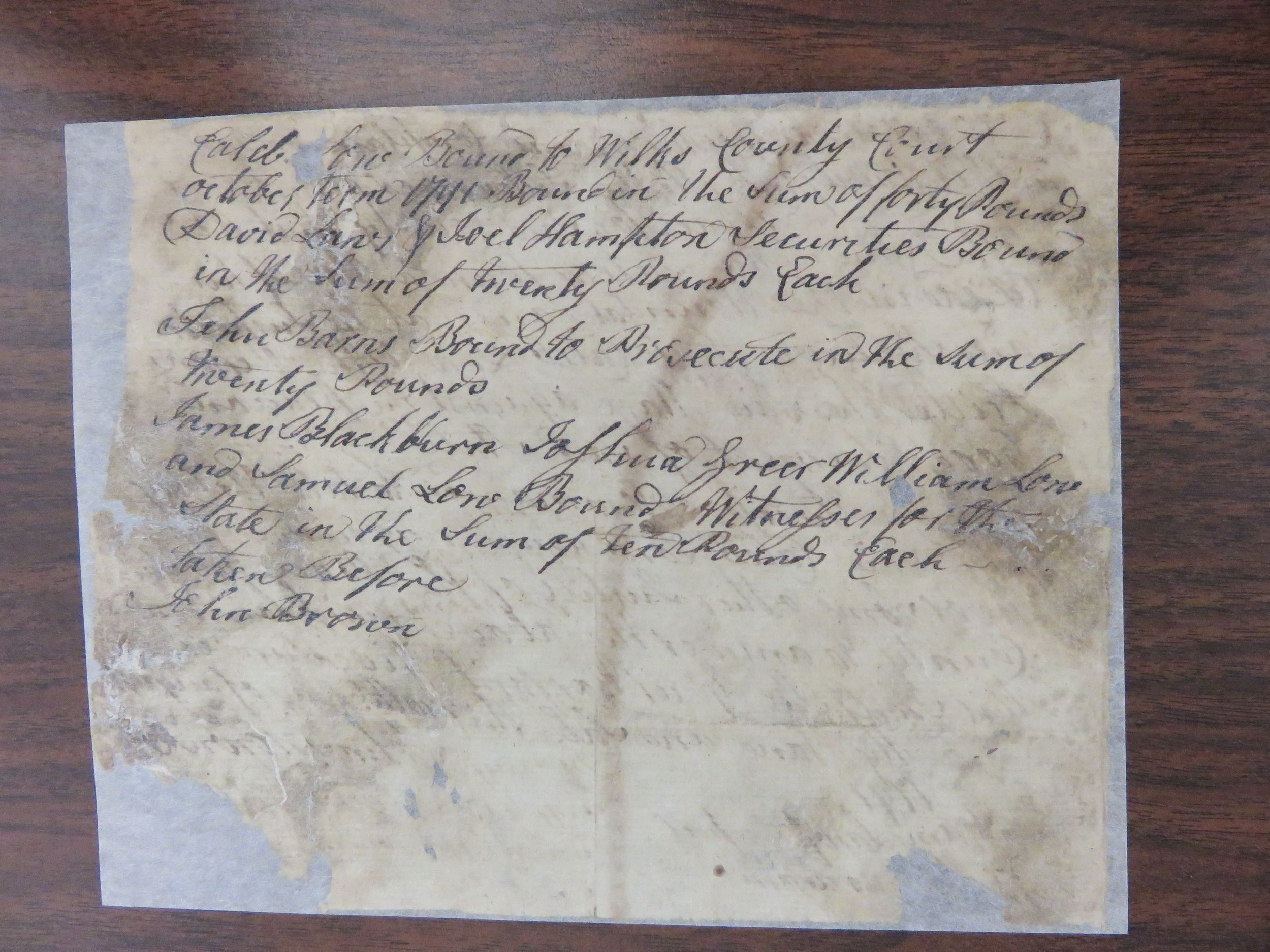
Caleb Low Bound to Wilks County Court
October Term 1791 Bound in the Sum of forty Pounds
David Low & Joel Hampton Securities Bound
in the Sum of twenty Pounds Each
Jehu Barns Bound to Prosecute in the Sum of
twenty Pounds
James Blackburn Joshua Greer William Low
and Samuel Low Bound Witnesses for the
State in the Sum of ten Pounds Each
taken Before
John Brown
Three Horses Cut with Knife (Front & Back)
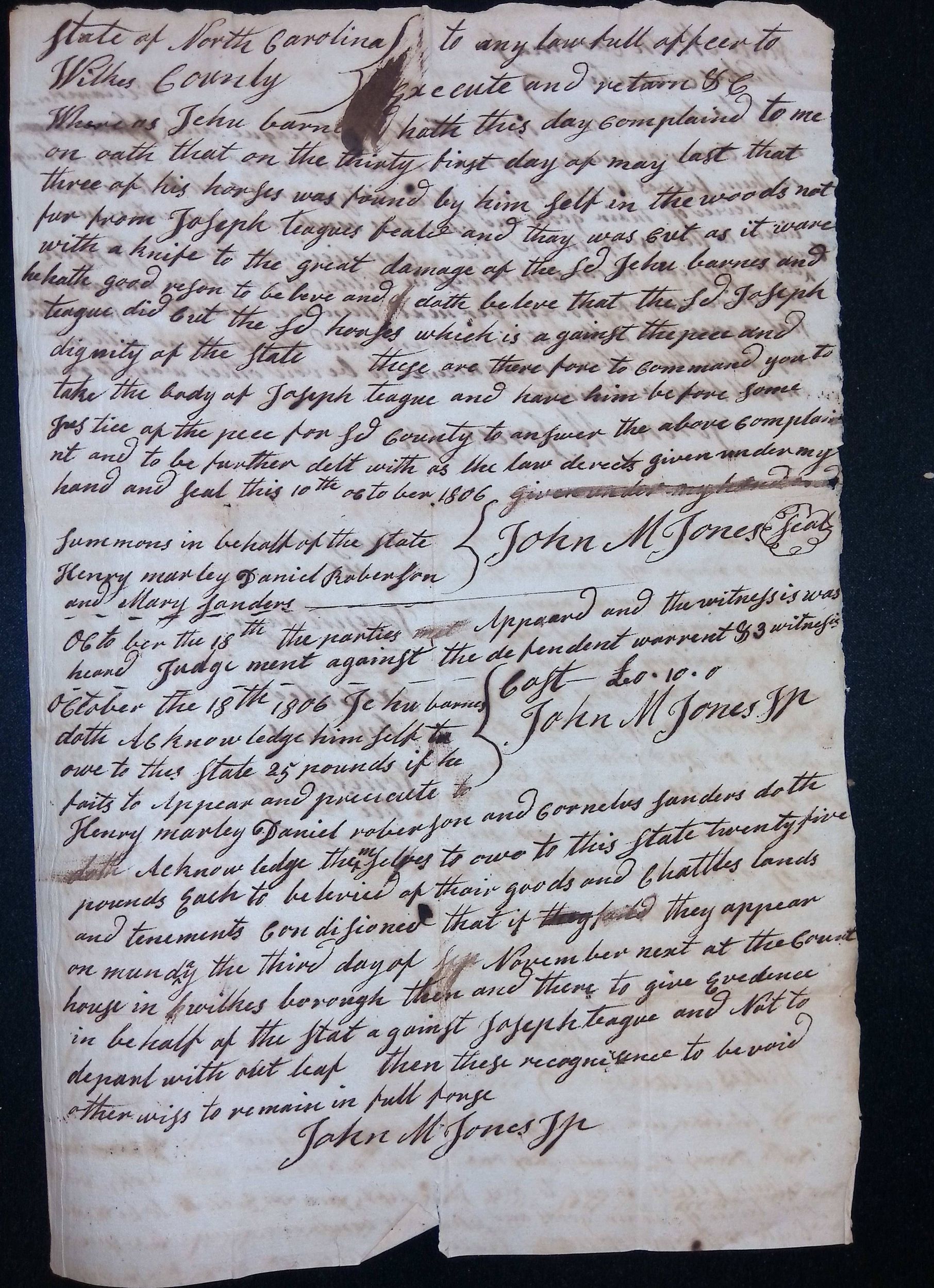
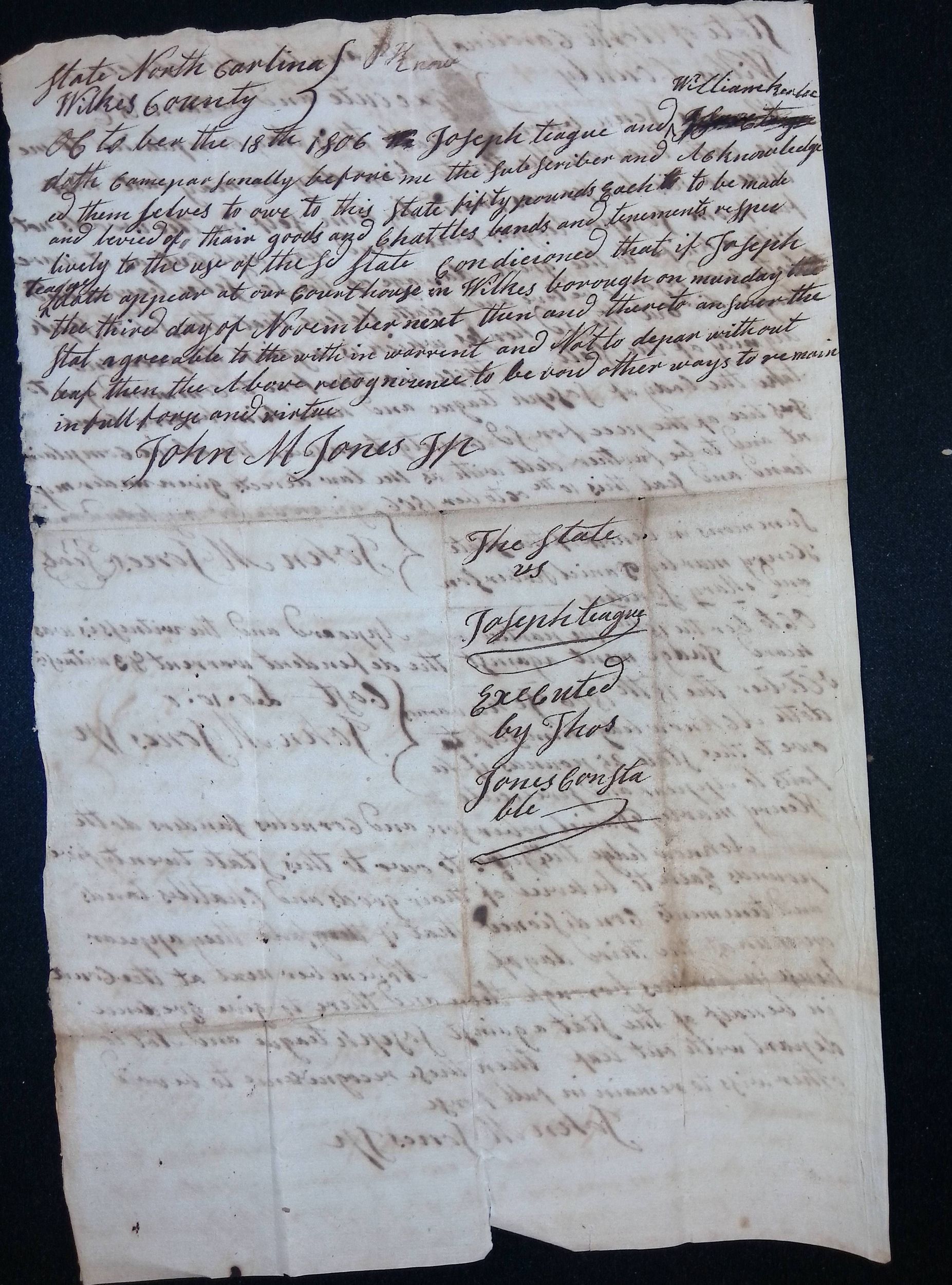
Beginning of the Teague conflict. Jehu finds three horses cut near Joseph Teague's field. Warrant issued, recognizance bonds posted, but case dismissed. This marks the start of a twelve-year feud that will escalate to arson and death threats.
[Front - b04f05-6821.jpg]
State of North Carolina
Wilkes County
to any lawfull offecer to
Execute and return &c
Whereas Jehu barnes hath this day complained to me
on oath that on the thirty first day of may last that
three of his horses was found by him self in the woods not
fur from Joseph teagues feald and thay was cut as it ware
with a knife to the great damage of the Sd Jehu barnes and
he hath good reson to beleve and doth beleve that the Sd Joseph
teague did cut the Sd horses which is a gainst the pece and
dignity of the state these are there fore to command you to
take the body of Joseph teague and have him before some
Justice of the pece for Sd County to answer the above complai
nt and to be further delt with as the law derects given under my
hand and seal this 10th october 1806 given under my hand
John M Jones Seal
Summons in behalf of the state
Henry marley Daniel Robenson
and Mary Sanders
October the 18th the parties Appaard and the witness is was
heard Judgement against the dependent warrent & 3 witneses
October the 18th 1806 Jehu barnes Cost L0.10.0
doth Acknowledge him self to John M Jones JP
owe to this state 25 pounds if he
fails to Appear and presecute &
Henry marley Daniel roberson and Cornelus sanders doth
doth Acknowledge them selves to owe to this state twenty five
pounds Each to be levied of their goods and Chattles lands
and tenements condisioned that if they failed they appear
on munday the third day of November next at the Court
house in wilkes borough then and there to give Evedence
in behalf of the stat a gainst Joseph teague and Not to
depart with out leaf then these recognisence to be void
other wiss to remain in full force
John M Jones JP
[Back - b04f05-6822.jpg]
State North carlina
Wilkes County
October the 18th 1806 Joseph teague and William Kence
doth came parsonally before me the subscriber and Acknowledge
ed them selves to owe to this state fifty pounds Each to be made
and levied of their goods and Chattles lands and tenements respec
tively to the use of the Sd state Condicioned that if Joseph
teague doth appear at our Court house in Wilkes borough on munday
the third day of November next then and there to answer the
stat agreeable to the with in warrent and Not to depar without
leaf then the Above recognisence to be void other ways to remain
in full force and virtue
John M Jones JP
The State
vs
Joseph teague
Executed
by Thos
Jones Consta
ble
The Teague Terror: 1808-1809
Arson, death threats, and systemic failure to prosecute
Barn Burning Warrant (Front & Back)
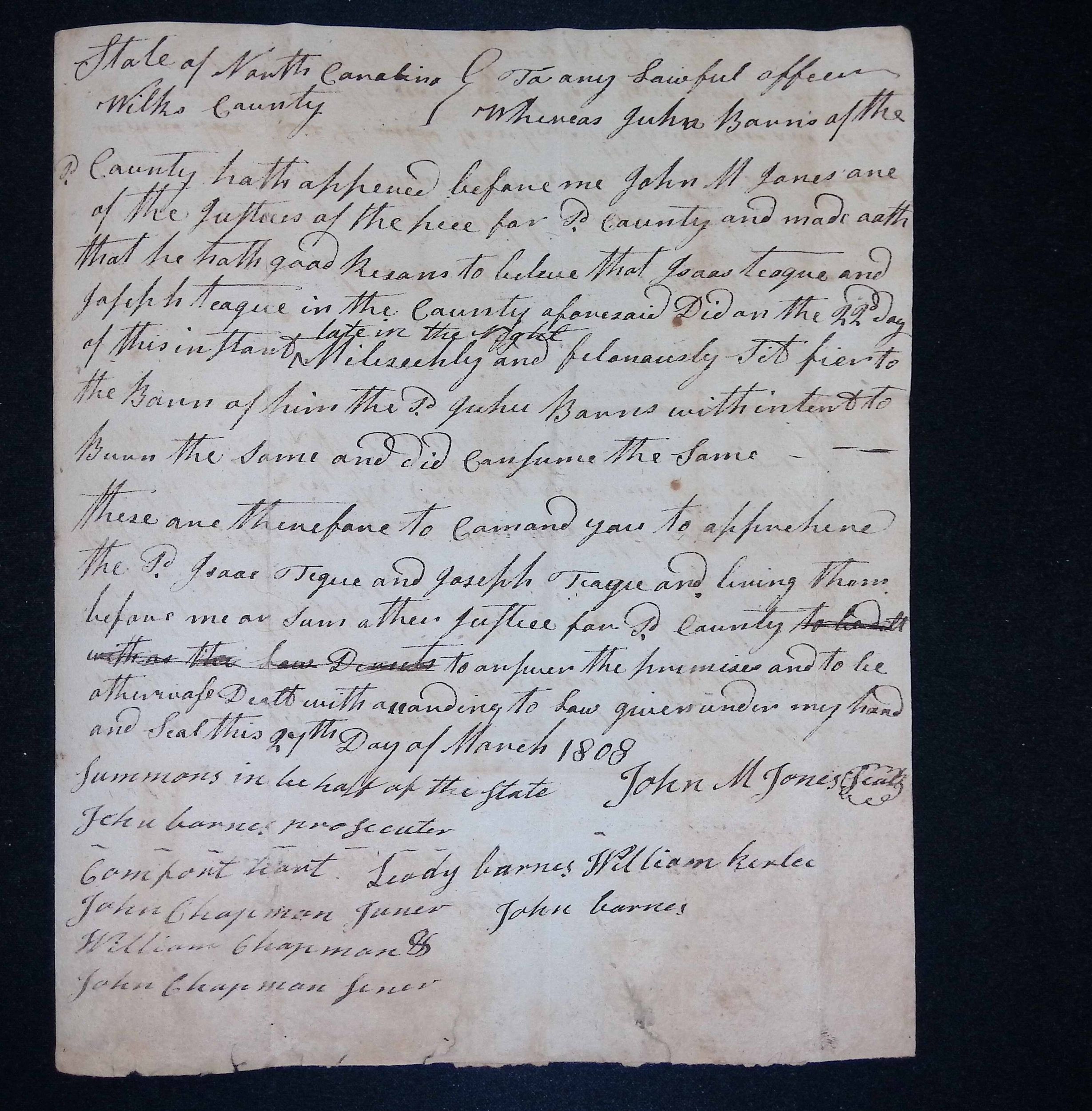
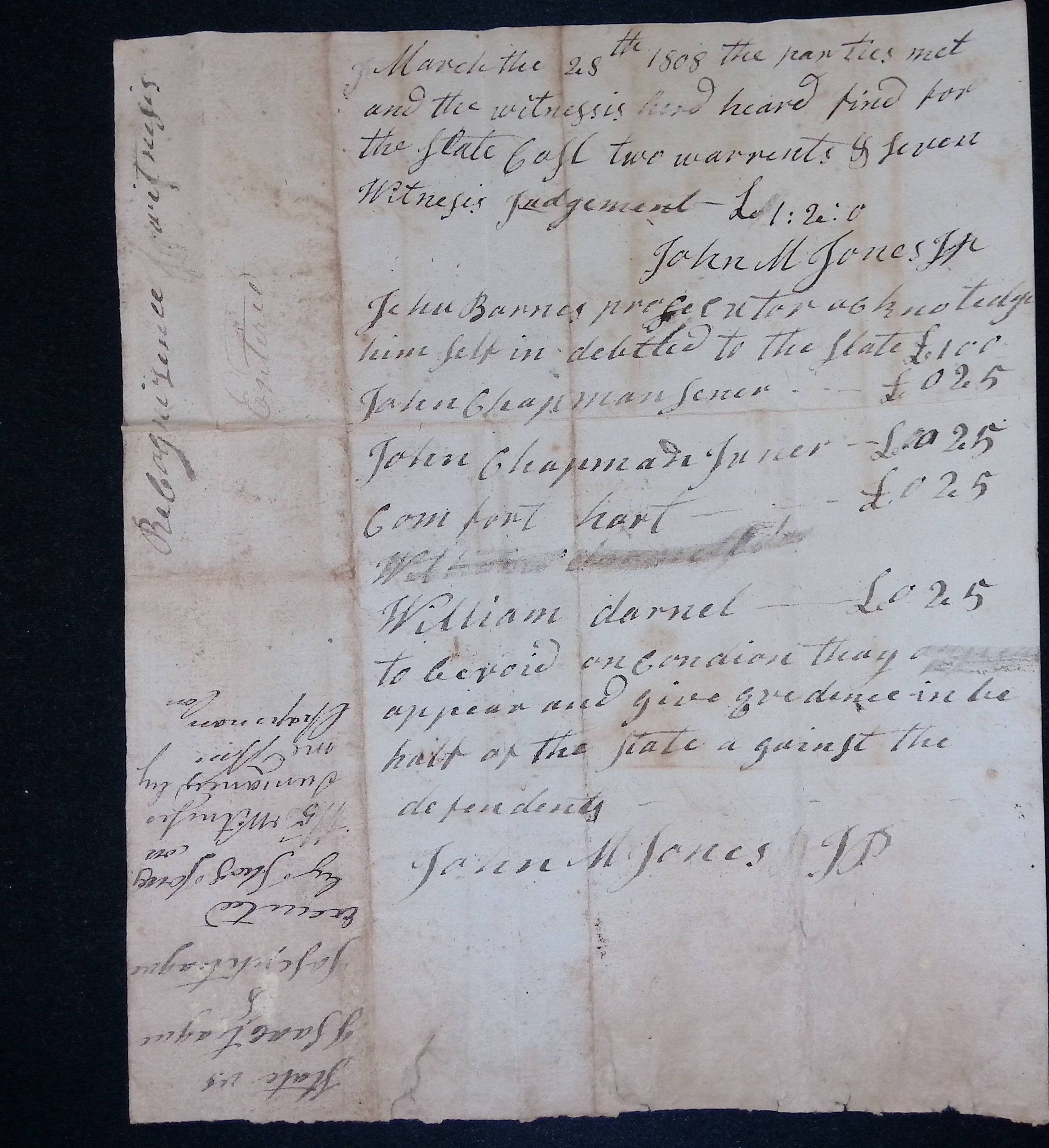
Jehu's barn burned at 1:00 AM on March 22, 1808. Contains corn, flax, oats, and flaxseed—economic devastation. Warrant issued against Isaac and Joseph Teague. Witnesses include Comfort Hart, Leody Barnes, William Kerlee, John Chapman Jr. & Sr., John Barnes, and William Chapman.
[Front - b05f02-7384.jpg]
State of North Carolina
Wilkes County
To any Lawful offecer
Whereas Jehu Barnes of the
County hath appered before me John M Jones one
of the Justices of the pece for Sd County and made oath
that he hath good Resons to beleve that Isaac Teague and
Joseph Teague in the County aforesaid Did on the 22d day
of this instant late in the Night Wilfully and felonously Set fier to
the Barn of him the Sd Jehu Barnes with intent to
Burn the Same and did Consume the Same -
These are therefore to Command you to apprehend
the Sd Isaac Teague and Joseph Teague and bring them
before me or Sum other Justice for Sd County to be delt
with as the Law Derects to answer the premises and to be
otherwase Dealt with according to Law given under my hand
and Seal this 25th Day of March 1808
Summons in be half of the State John M Jones Seal
Jehu barnes prosecuter
Comfort hart Leody barnes William Kerlee
John Chapman Juner John barnes
William Chapman &
John Chapman Sener
[Back - b05f02-7385.jpg]
Recognisence witnesis
Entered
March the 28th 1808 the parties met
and the witnessis herd heard find for
the State Cost two warrents & Seven
Witnesis Judgement - L 1:2:0
John M Jones JP
Jehu Barnes procecutor acknowledge
him self in debted to the State L 100
John Chapman Sener L 0 2 5
John Chapman Juner L 0 2 5
Comfort hart L 0 2 5
William darnel L 0 2 5
to be void on condicion thay
appear and give evedence in be
half of the State a gainst the
dependents
John M Jones JP
The State
vs
Isaac Teague
Joseph Teague
Executed
by Thos Jones
Const
Peace Bond: "Actually Afraid" (Front & Back)
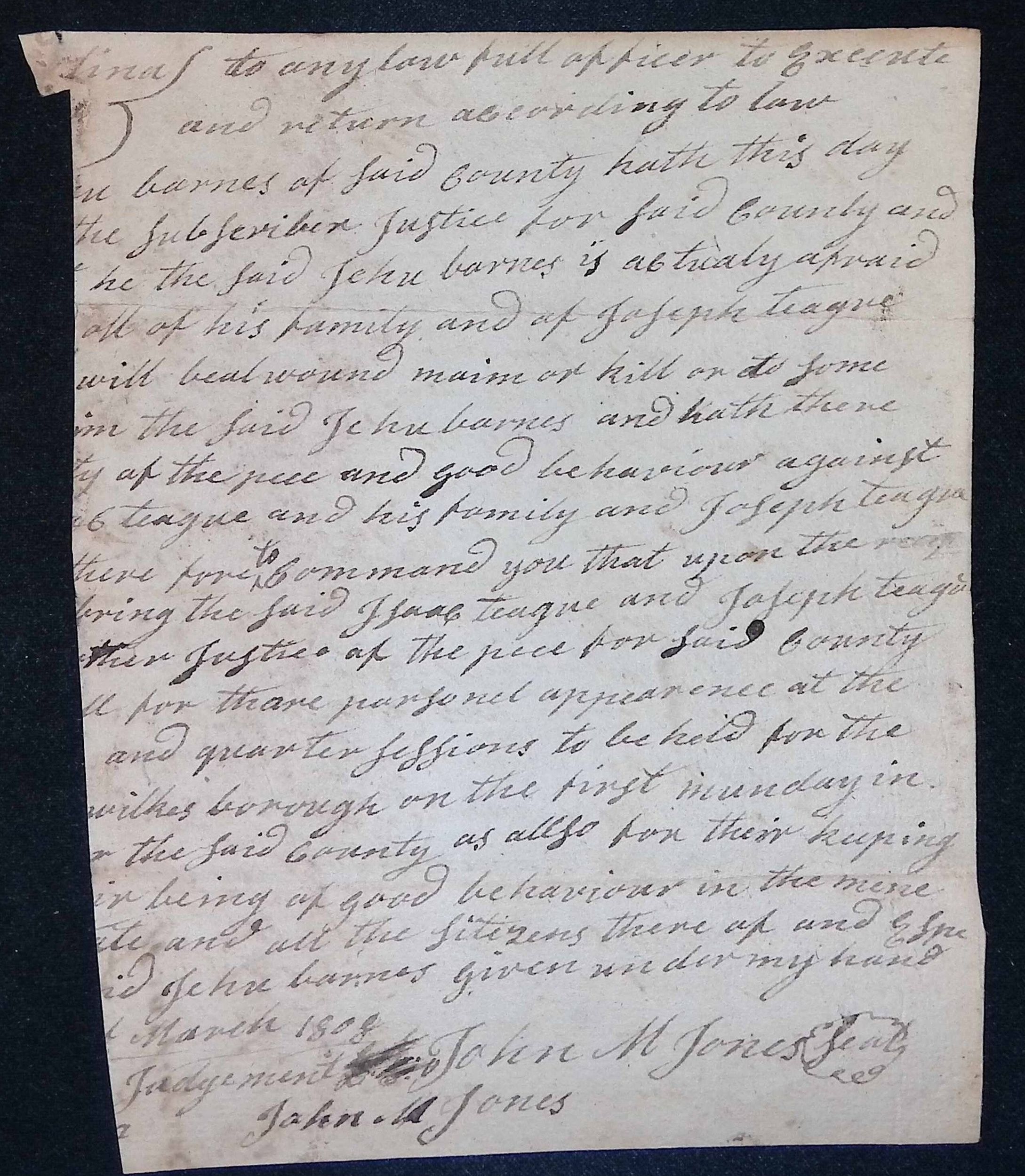
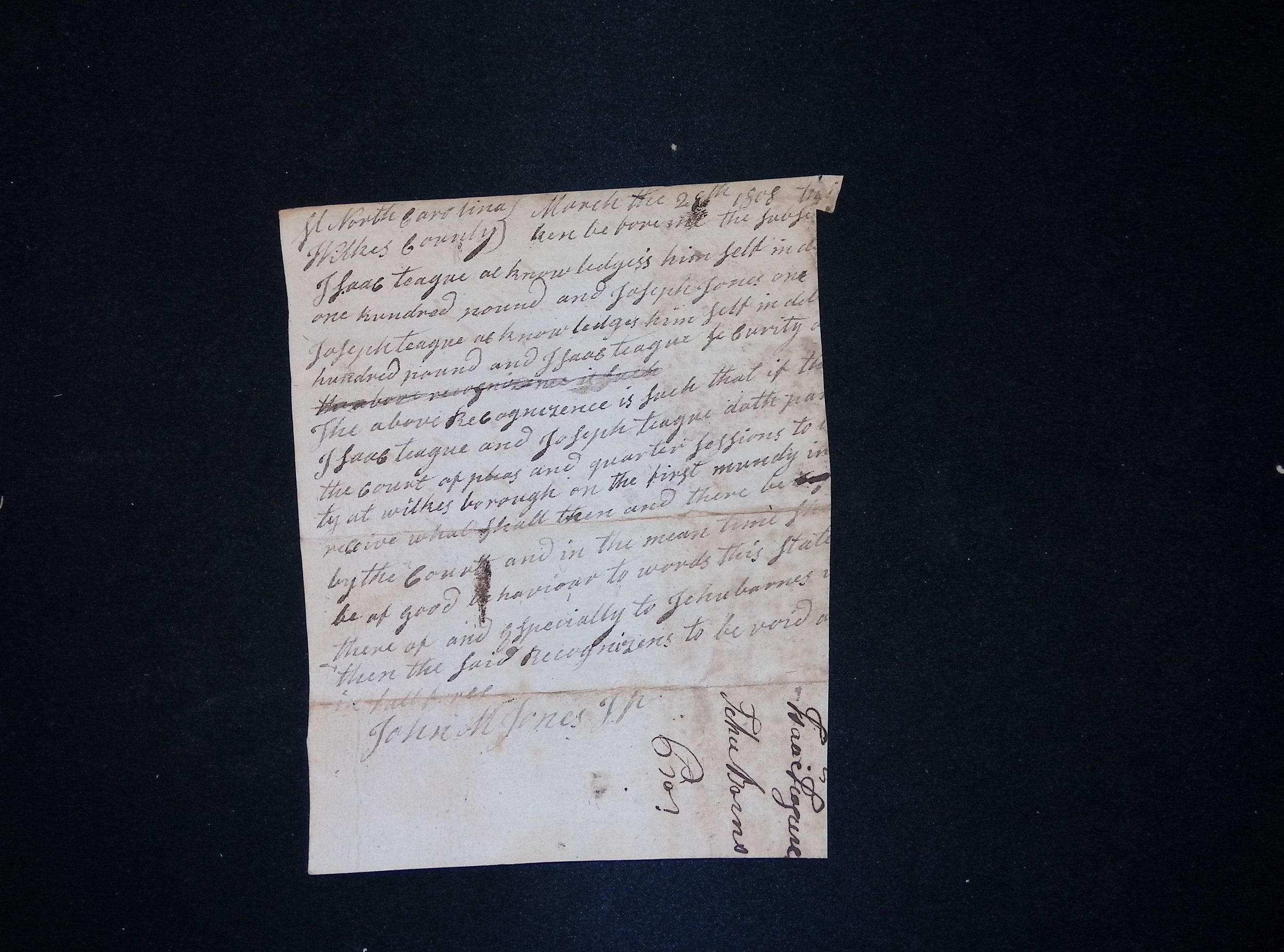
Twelve years before his murder, Jehu's fear was documented under oath. Jehu swears he is "actualy afraid" Joseph and Isaac Teague will "beat wound maim or kill" him or his family. Both Teagues required to post £100 bonds to keep the peace.
[Front - b05f03-7485.jpg]
lina To any lawfull officer to Execute
and return according to law
Jehu barnes of said County hath this day
the Subscriber Justice for said County and
he the said Jehu barnes is actualy afraid
all of his family and of Joseph teague
will beat wound maim or kill or do some
m the said Jehu barnes and hath there
y of the pece and good behaviour against
c teague and his family and Joseph teague
there fore to Command you that upon the rec
bring the said Isaac teague and Joseph teague
ther Justice of the pece for said County
ll for thare parsonel appearence at the
and quarter sessions to be held for the
wilkes borough on the first munday in
r the said County as allso for their keping
in being of good behaviour in the mene
te and all the Citizens there of and Espe
id Jehu barnes given under my hand
March 1808
Judgement John M Jones Seal
John M Jones
[Back - b05f03-7486.jpg]
State North Carolina Wilkes County March the 28th 1808
Isaac teague acknowledge him self in d
one hundred pound and Joseph Jones one
Joseph teague acknowledges him self in d
hundred pound and Isaac teague security
The above Recognizence is Such that if the
Isaac teague and Joseph teague doth pea
the Court of pleas and quarter sessions to
ty at wilkes borough on the first mundy in
receive what shall then and there be
by the Court and in the mean time sh
be of good behaviour towards this State
there of and Especially to Jehu barnes
then the said Recognizens to be void o
in full force
John M Jones JP
Jehu Barns
Prosecutor
Arson Indictment - September Term 1809 (Front & Back)
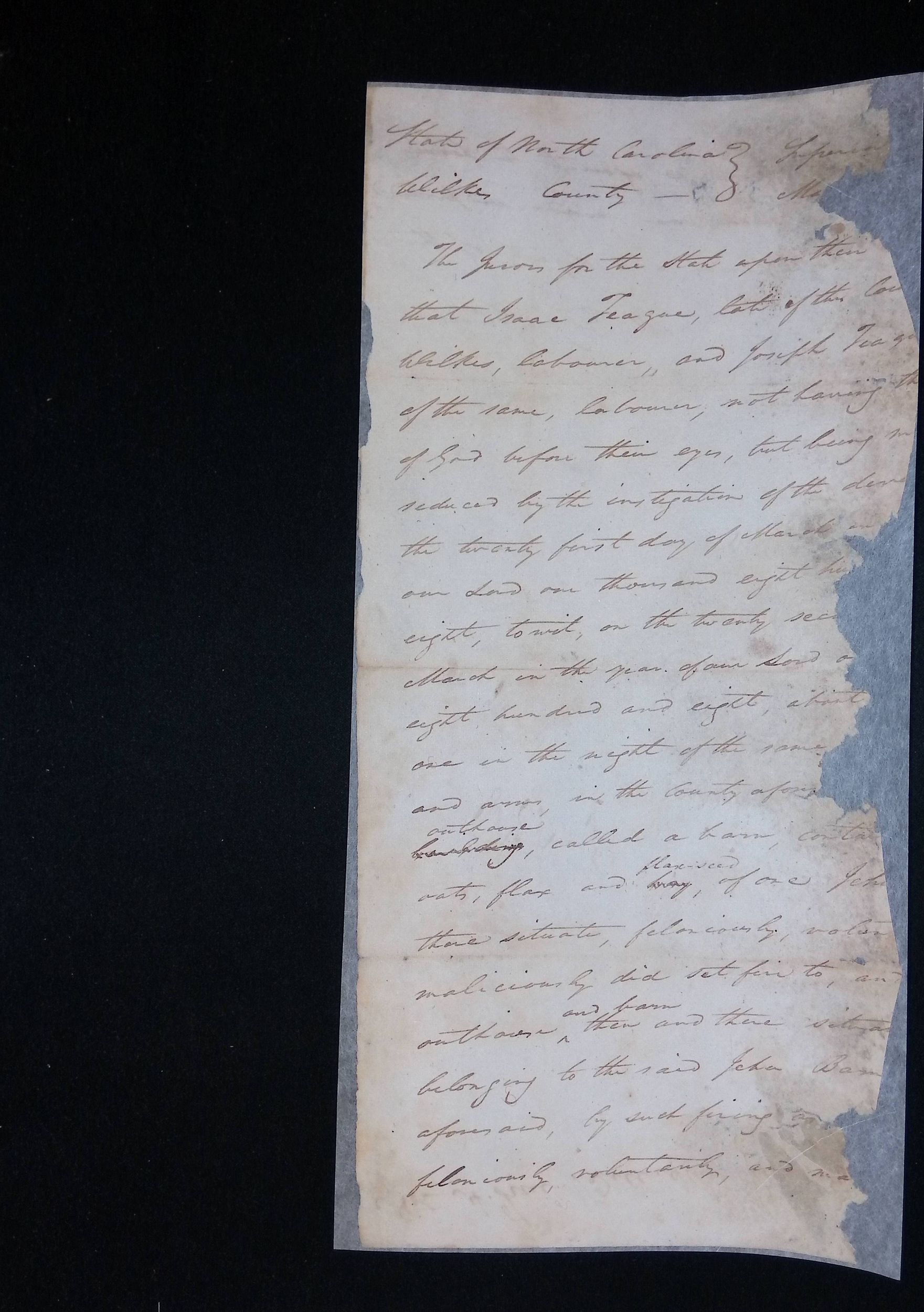
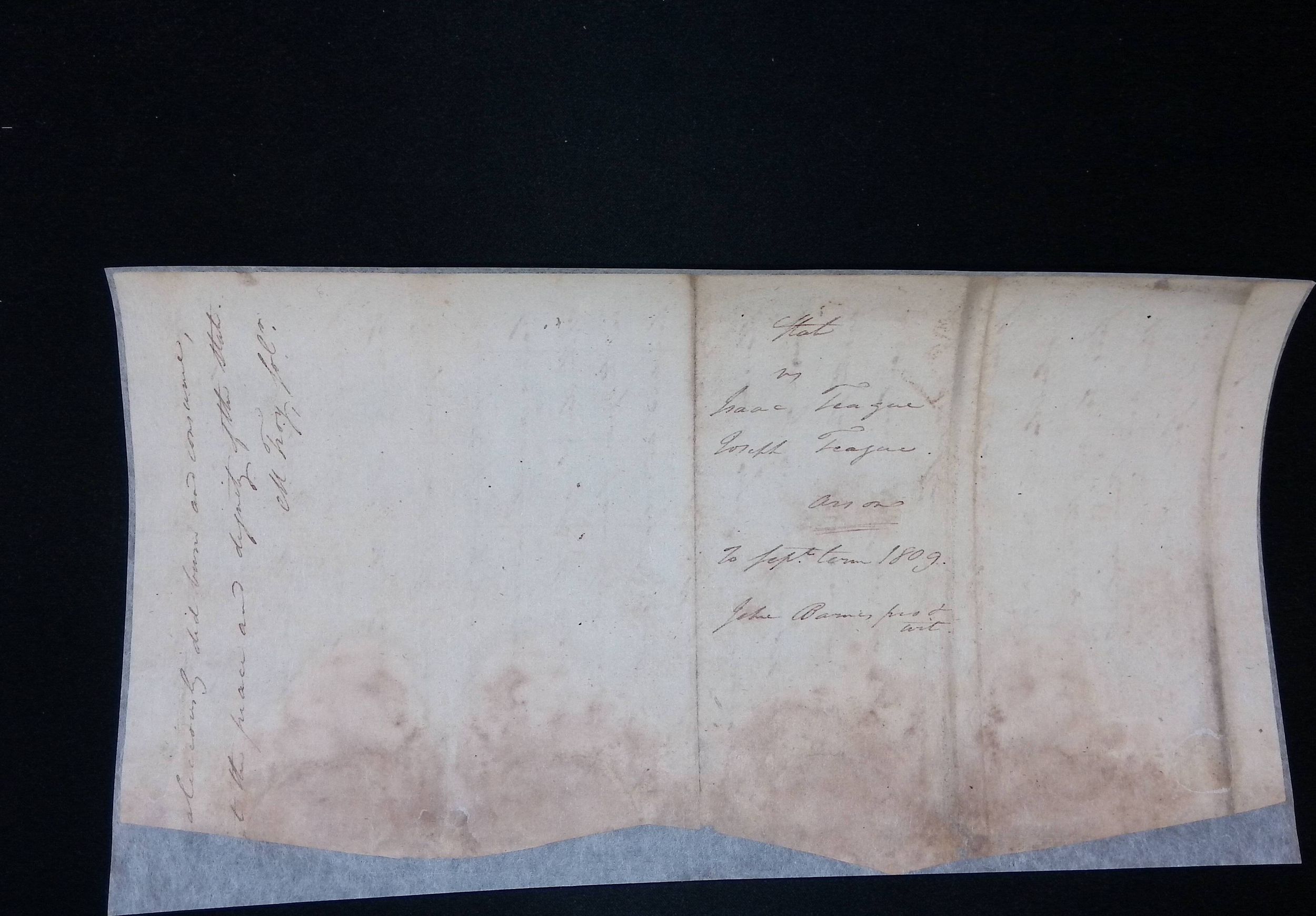
Grand jury indictment charging Isaac and Joseph Teague with arson. Dramatic language: "not having the fear of God before their eyes but being moved and seduced by the instigation of the devil." Despite this, both arson prosecutions ultimately fail.
[Front - b05f04-7614.jpg]
State of North Carolina Superior Court
Wilkes County September Term
The Jurors for the State upon their oath
present that Isaac Teague, late of the
County of Wilkes, labourer, and Joseph
Teague, late of the same, labourer, not
having the fear of God before their eyes but
being moved and seduced by the instigation
of the devil, after the twenty first day of March
in the year of our Lord one thousand eight
hundred and eight, to wit, on the twenty second
day of March in the year of our Lord one
thousand eight hundred and eight, about the
hour of one in the night of the same day
with force and arms, in the County aforesaid
a certain outhouse, called a barn, contain
ing corn, flax, oats, and flaxseed, of one
Jehu Barnes, there situate, feloniously,
voluntarily, and maliciously did set
fire to, and the same outhouse and barn
then and there situate and belonging to
said Jehu Barnes as aforesaid, by such
firing as aforesaid, feloniously, voluntarily
[Back - b05f05-7654.jpg]
liciously did burn and consume,
to the peace and dignity of the State.
M. Troy Solr.
State
vs
Isaac Teague
Joseph Teague.
Arson
To Sept Term 1809.
Jehu Barnes, pros &
wit.
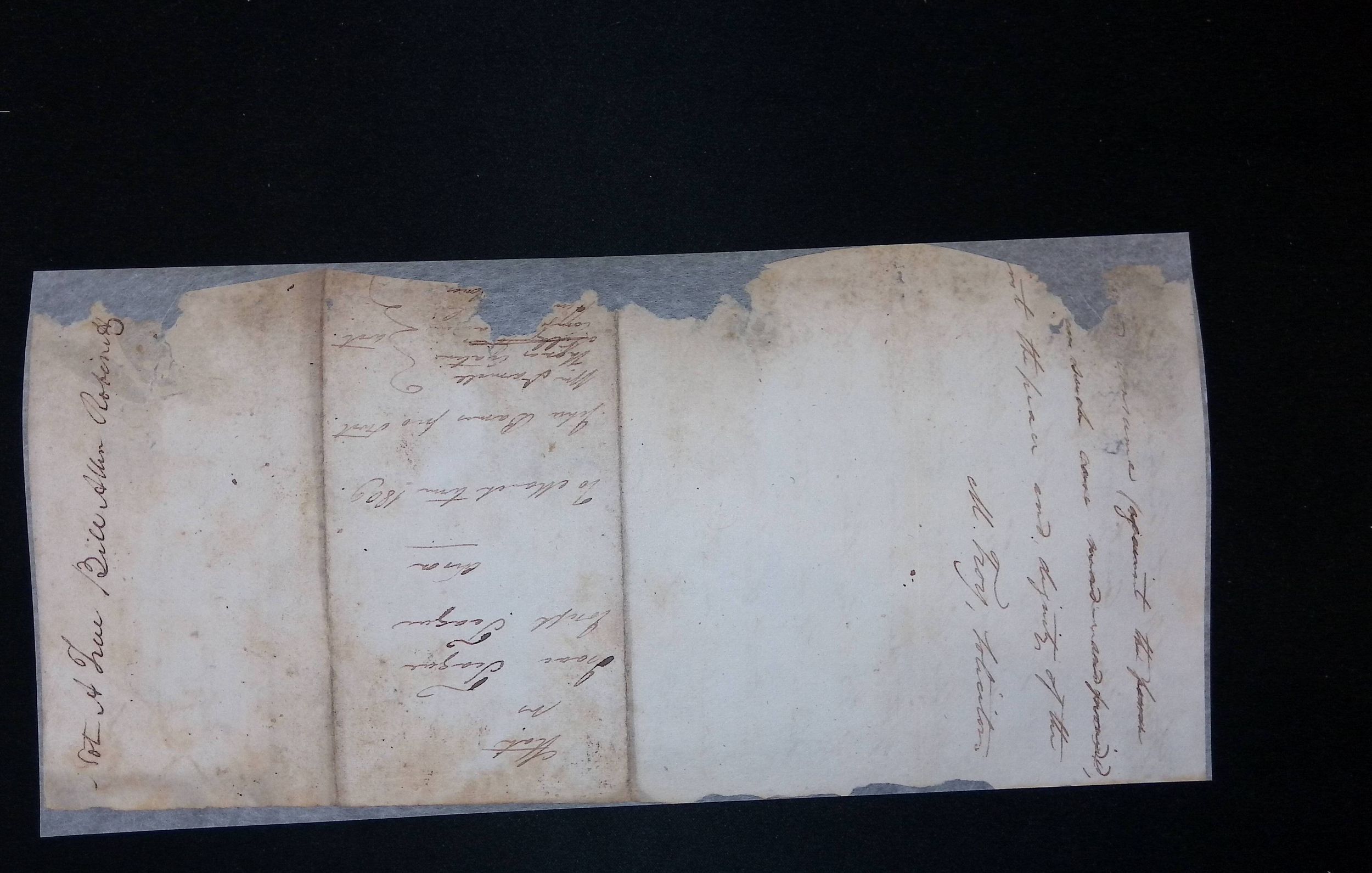
Second Arson Indictment - March Term 1809
Second indictment for the same barn burning. Marked "Not A True Bill" by foreman Allen Robinett. Both arson prosecutions fail—the Teagues walk free despite overwhelming evidence.
Not A True Bill Allen Robinett
State
vs
Isaac Teague
Joseph Teague
Indictment
Arson
Jehu Barns pro & wit.
To March Term 1809.
liciously (against the peace)
and dignity of the
M. Troy, Solicitor
Family Violence Escalates: October 1820
Two months before Jehu's murder, trouble in the Barnes family
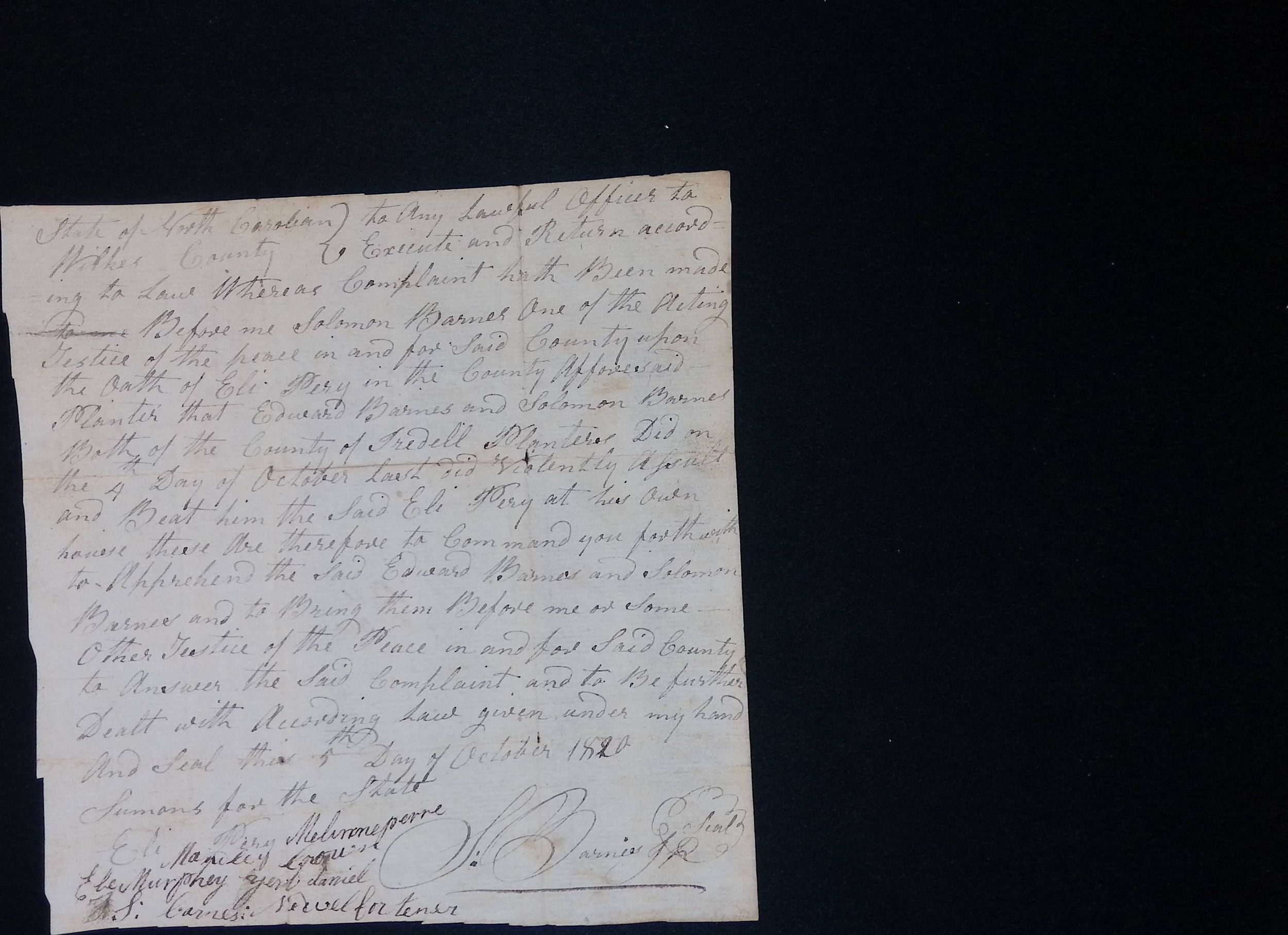
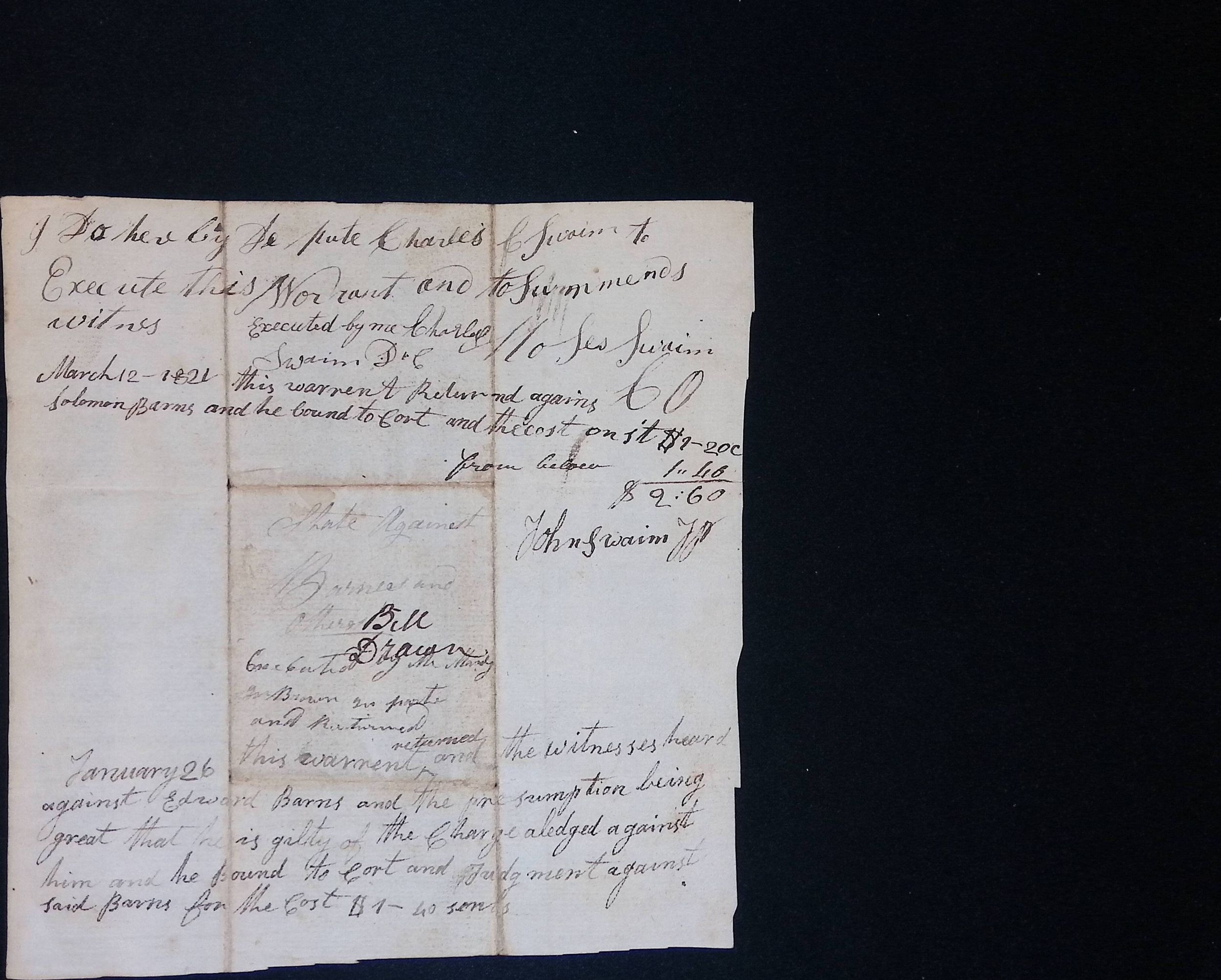
Edward Barnes Assault Warrant (Front & Back)
Edward Barnes (possibly Jehu's son) and Solomon Barnes assault Eli Pery. Two months before Jehu's murder. What was happening in the Barnes family in fall 1820? Edward found guilty and bound to court.
[Front - b09f06-1083.jpg]
State of North Carolina To Any Lawful Officer to
Wilkes County Execute and Return accord
ing to Law Whereas Complaint hath Been made
Before me Solomon Barnes One of the Acting
Justice of the peace in and for Said County upon
the Oath of Eli Pery in the County Aforesaid
Planter that Edward Barnes and Solomon Barnes
Both of the County of Iredell Planters Did on
the 4 Day of October last Did Violently Assault
and Beat him the Said Eli Pery at his Own
house these Are therefore to Command you forthwith
to Apprehend the Said Edward Barnes and Solomon
Barnes and to Bring them Before me or Some
Other Justice of the Peace in and for Said County
to Answer the Said Complaint and to Be further
Dealt with According Law given under my hand
And Seal this 5 Day of October 1820
Sumans for the State
Eli Pery Melvone perre
Charles Murphey & Daniel
S. Barnes Servel Fortner
[Back - b09f06-1084.jpg]
I Do here by De pute Charles Swaim to
Execute this Worrant and to Summonds
witnes
March 12 - 1821
Solomon Barnes
Executed by me Charles
Swaim D C
This warrent Returned agains
and he bound to Cort and the cost on it
from below
Mo Ses Swaim
60
$1-20c
1.40
$2.60
John Swaim JP
State Against
Barnes and
Others Bill
Executed By me Charles Swaim D C
John Brown as proste
and Returned
this warment returned the witnesses heard
January 26
against Edward Barns and the presumption being
great that he is gilty of the Charge aledged against
him and he bound to Cort and Judgment against
said Barns for the Cost $1-40 cents
The Murder: December 1820 - March 1821
Eyewitness testimony, medical evidence, and murder indictment
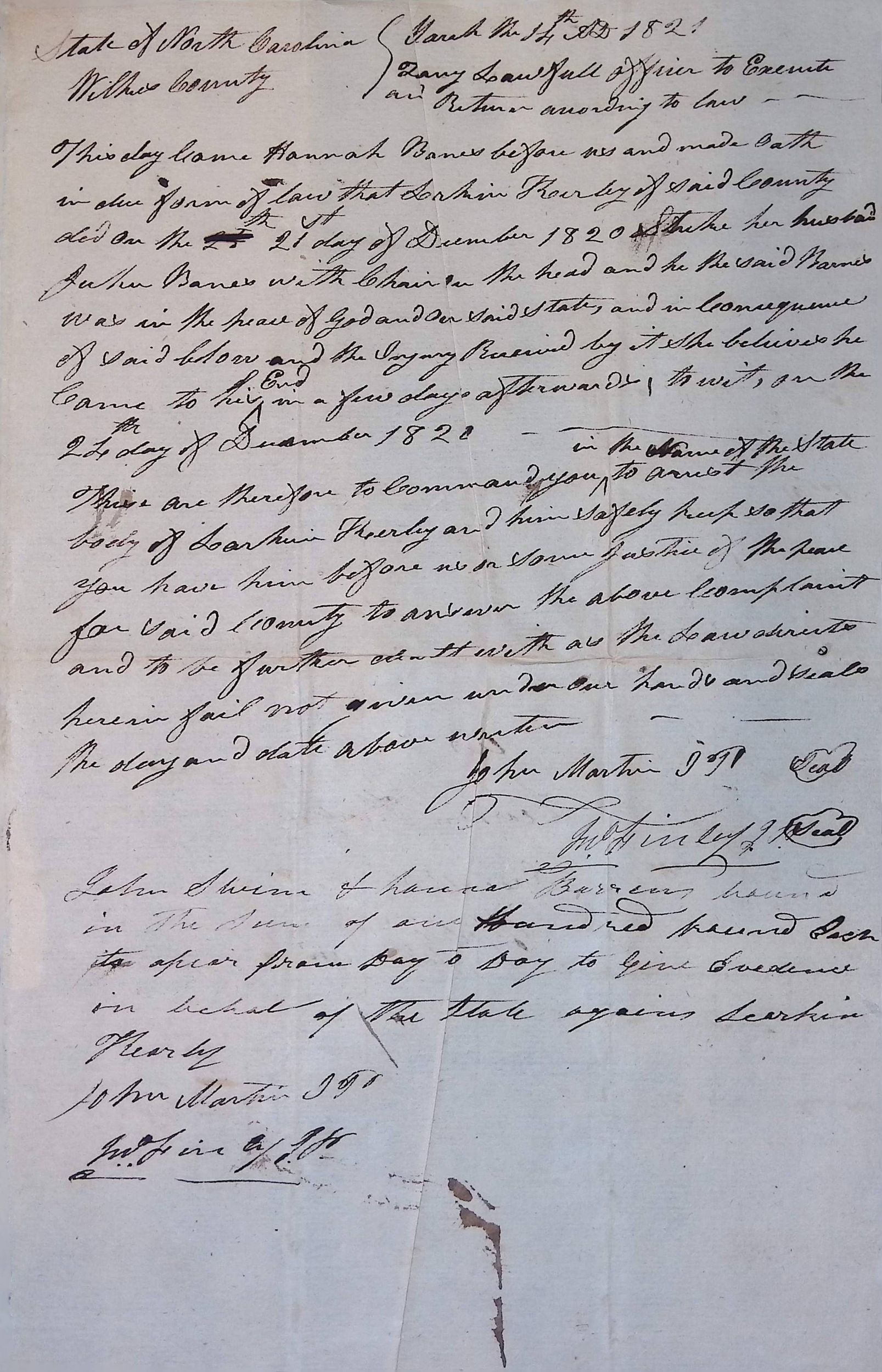
Murder Warrant (Front & Back)
Hannah Barnes swears Larkin Kerly struck her husband with a chair. Murder warrant issued. Hannah and John Swaim bound at £100 each to give evidence. Executed by Thomas Witherspoon.
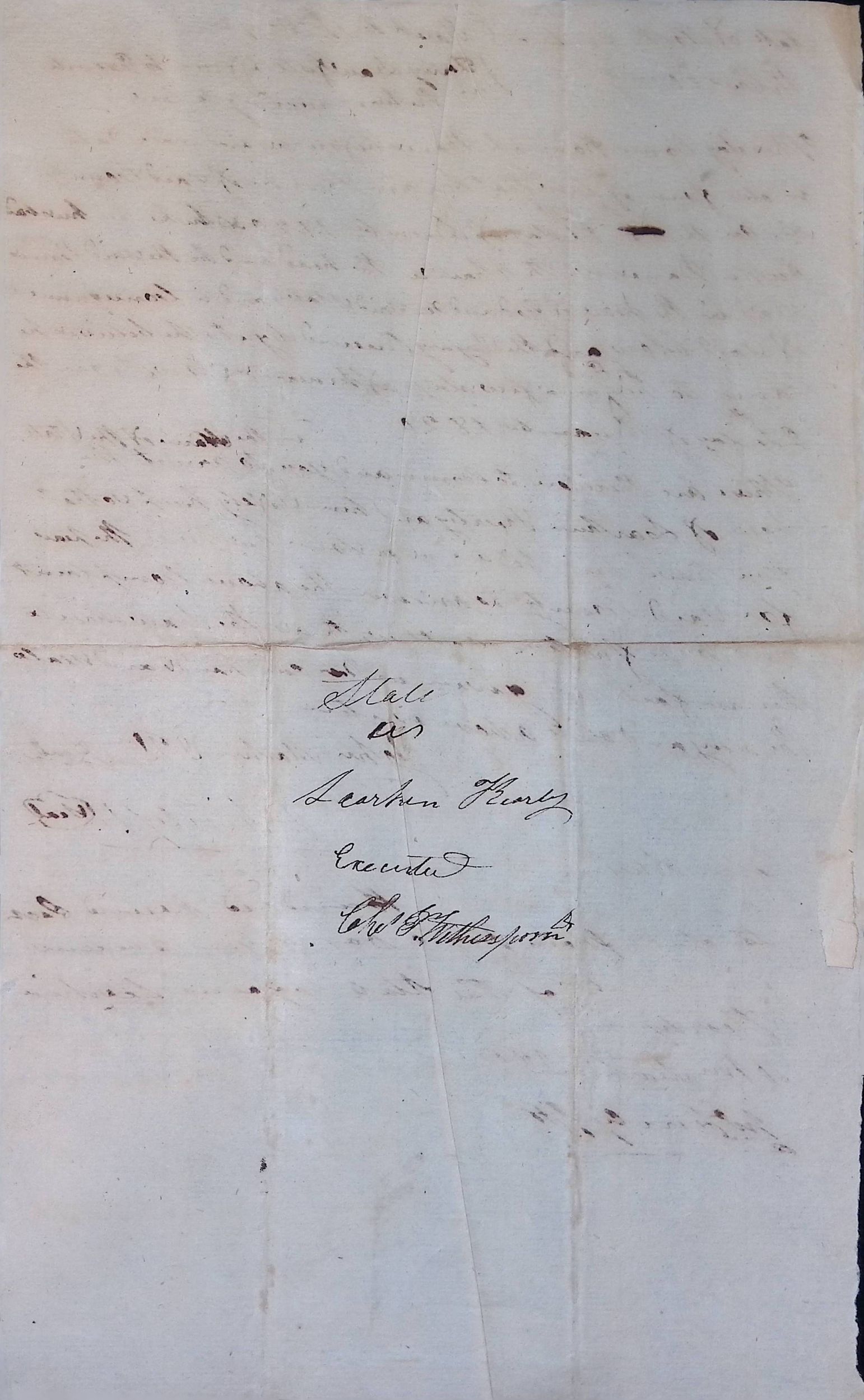
[Front - b10f02-0920.jpg]
State of North Carolina
Wilkes County
March the 14th AD 1821
To any Lawfull officer to Execute
and Return according to law
This day Came Hannah Banes before us and made Oath
in due form of law that Larkin Kerly of Said County
did On the 21 day of December 1820 Strike her husband
John Banes with Chair on the head and he the Said Barnes
was in the peace of God and Said State, and in Consequence
of Said blow and the Injury Received by it She believes he
Came to his End in a few days afterwards, to wit, on the
24th day of December 1820 - in the Name of the State
These are therefore to Command you to arrest the
body of Larkin Kerly and him Safely keep so that
you have him before us or Some Justice of the peace
for Said County to answer the above Complaint
and to be further dealt with as the Law directs
herein fail not given under our hands and Seals
the day and date above written
John Martin JP Seal
W. Finley JP Seal
John Swaim & hanna Barnes bound
in the Sum of one Hundred pound Each
to apear from Day to Day to Give Evedence
in behal of the State agains Larkin
Kerly
John Martin JP
W. Finley JP
[Back - b10f02-0922.jpg]
State
vs
Larkin Kerly
Executed
Thos Witherspoon D
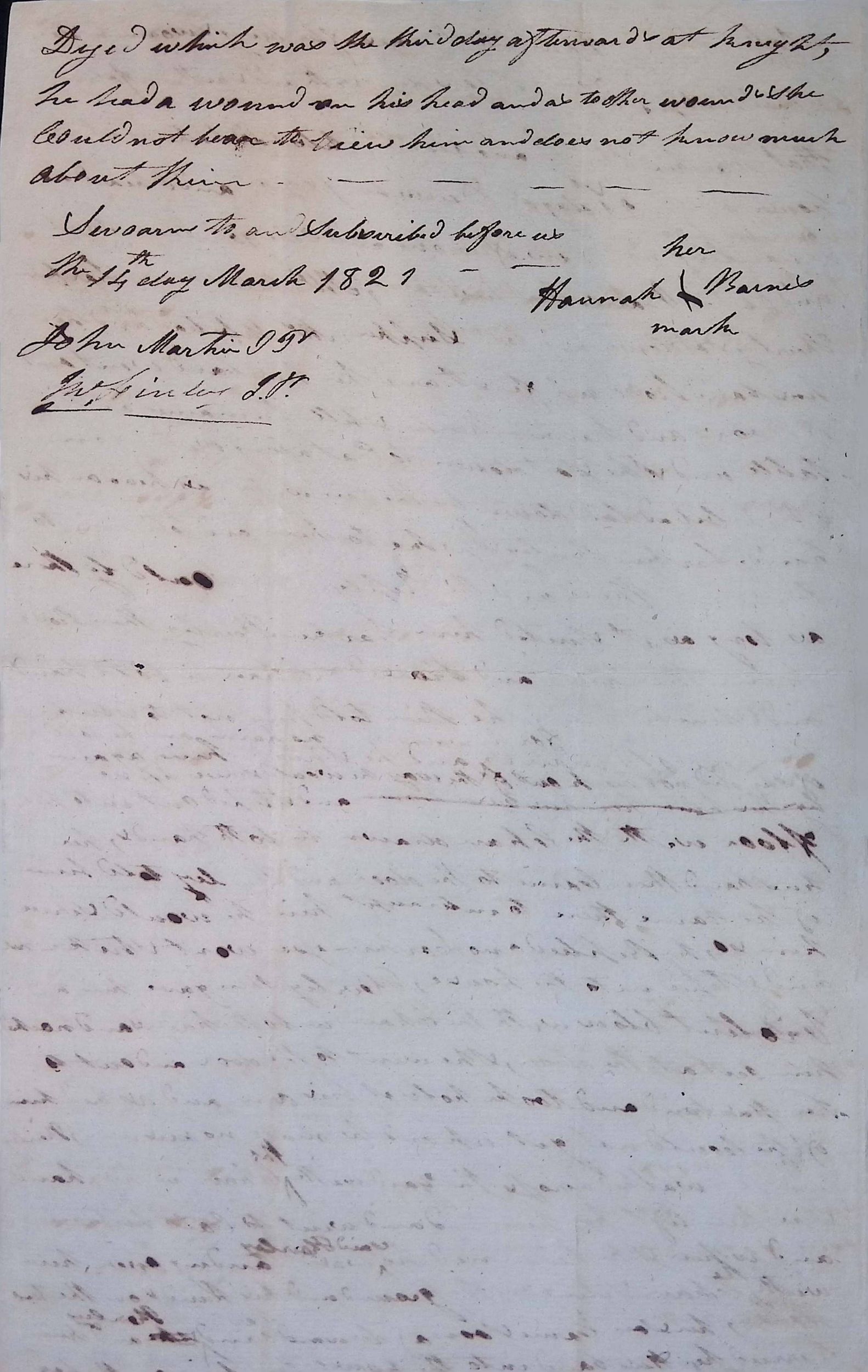
Hannah Barnes's Eyewitness Testimony (Front & Back)
The most important document. Hannah describes in vivid detail: the supper, Kerly's sudden rage, the attack on old Mr. Milstead, Jehu's last words ("no Larkin you wont Strike me"), and the fatal blow. She could not bear to view all her husband's wounds. Signed with her mark (X).
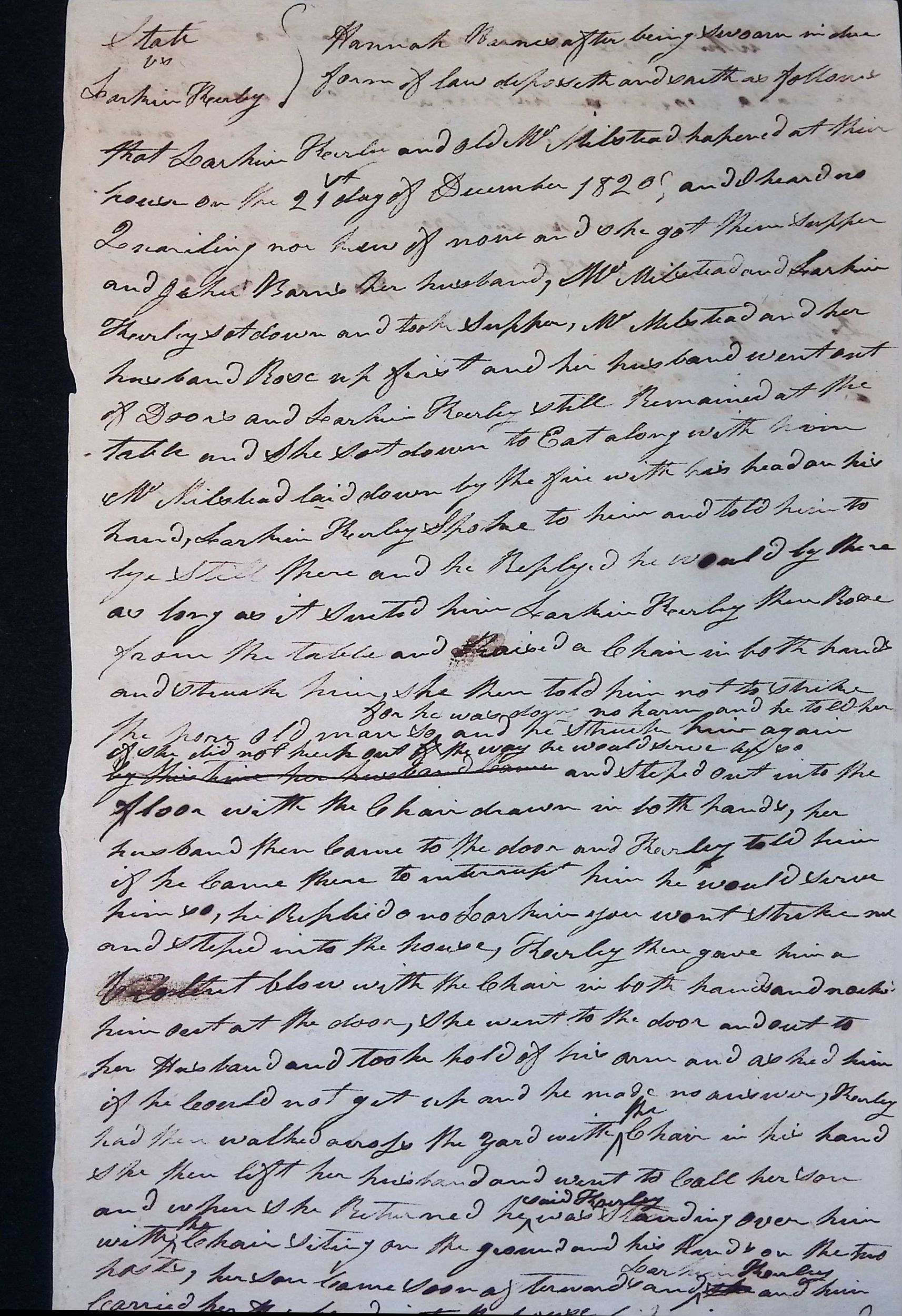
[Front - b10f01-0836.jpg]
State
vs
Larkin Kerly
Hannah Barnes after being Sworn in due
form of law deposeth and saith as follows
that Larkin Kerly and old Mr Milstead happened at their
house on the 21st day of December 1820, and I heard no
Quariling nor knew of none and She got them Supper
and John Barnes her husband, Mr Milstead and Larkin
Kerly Sat down and took Supper, Mr Milstead and her
husband Rose up first and her husband went out
of Doors and Larkin Kerly Still Remained at the
Table and She Sat down to Eat along with him
Mr Milstead laid down by the fire with his head on his
hand, Larkin Kerly Spoke to him and told him to
lye Still there and he Replyed he would ly there
as long as it Suited him Larkin Kerly then Rose
from the Table and Raised a Chair in both hands
and Struck him, She then told him not to Strike
the pore Old man for he was doing no harm to him and he told her
if She did not hush or get out of the way he would Serve her so
by this time her husband Came and Steped out into the
floor with the Chair drawn in both hands, her
husband then Came to the door and Kerly told him
if he Came there to interrupt him he would Serve
him so, he Replied no Larkin you wont Strike me
and Steped into the house, Kerly then gave him a
Violent blow with the Chair in both hands and nockd
him out at the door, She went to the door and out to
her Husband and took hold of his arm and asked him
if he Could not get up and he made no answer, Kerly
had then walked acrost the yard with the Chair in his hand
She then left her husband and went to Call her Son
and when She Returned She said Kerly was Standing over him
with the Chair Seting on the ground and his hands on the two
posts, her Son Came Soon af terward and Larkin Kerly
Carried her husband in and put him on the bed and he
[Back - b10f01-0837.jpg]
Dyed which was the third day afterward at knight,
he had a wound on his head and as to other wounds She
Could not bear to View him and does not know much
about them
Sworn to and Subscribed before us
the 14th day March 1821
John Martin JP
W. Finley JP
her
Hannah X Barnes
mark
John Swaim's Medical Testimony
Medical examination before and after death. John Swaim examined Jehu alive (paralyzed: "he Could neither move hand or foot") and dead (desperate bruise between shoulders, broken shoulders, extensive bruising to hips). Concluded the shoulder wound caused death.
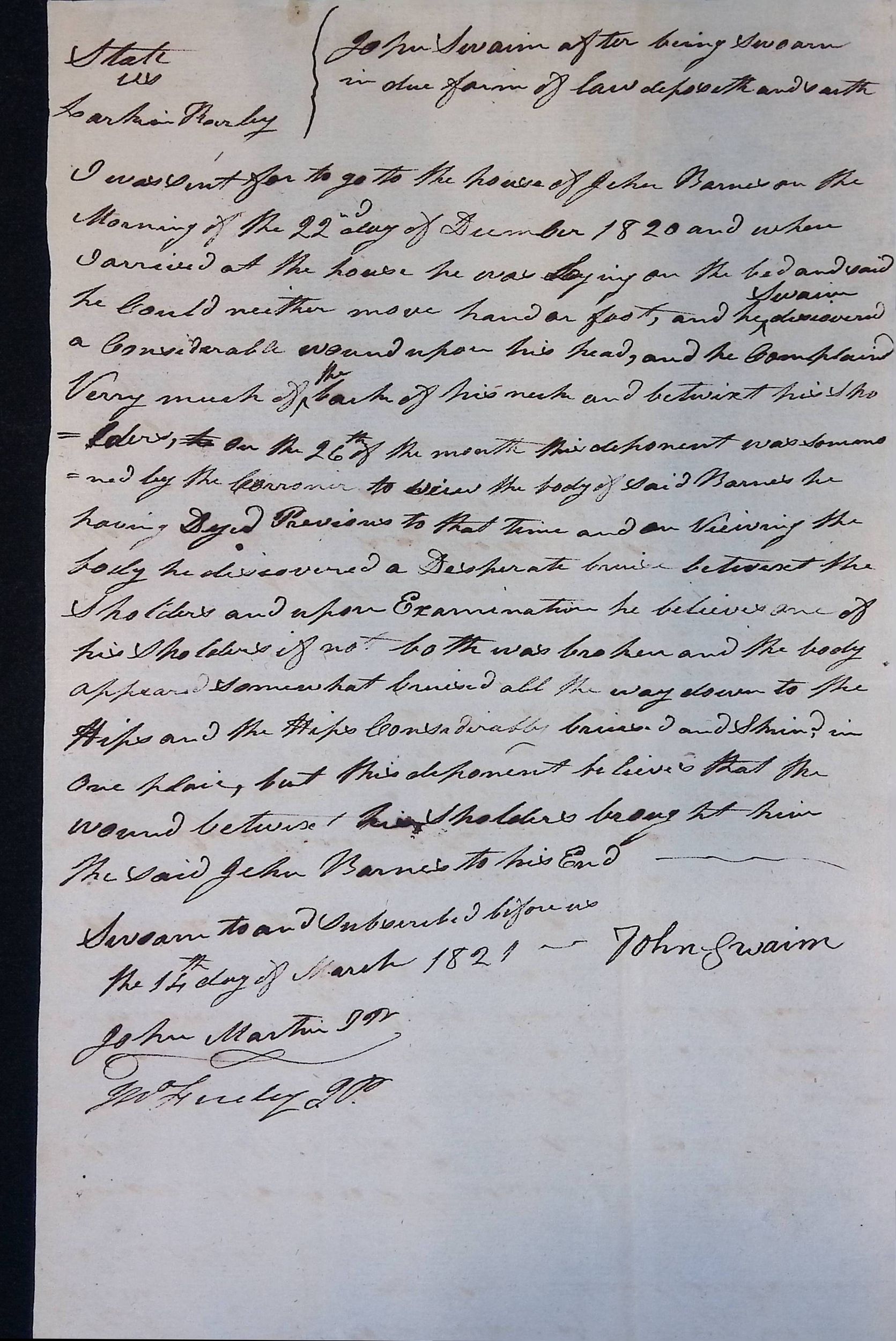
State
vs
Larkin Kerly
John Swaim after being Sworn
in due form of law deposeth and saith
I was Sent for to go to the house of John Barnes on the
Morning of the 22d day of December 1820 and when
I arrived at the house he was Laying on the bed and said
he Could neither move hand or foot, and he Swaim discovered
a Considerable wound upon his head, and he Complaind
Verry much of the back of his neck and betwixt his Sho
=lders, on the 26th of the month this deponent was somons
=ned by the Corroner to View the body of Said Barnes he
having Dyed Previous to that Time and on Viewing the
body he discovered a Desperate bruise betwixt the
Shoulders and upon Examination he believes one of
his Shoulders if not both was broken and the body
appeared Somewhat bruised all the way down to the
Hips and the Hips Considerable bruised and Skind in
One place, but this deponent believes that the
wound betwixt his Shoulders brought him
the Said John Barnes to his End
Sworn to and Subscribed before us
the 14th day of March 1821 ~ John Swaim
John Martin JP
W. Finley JP
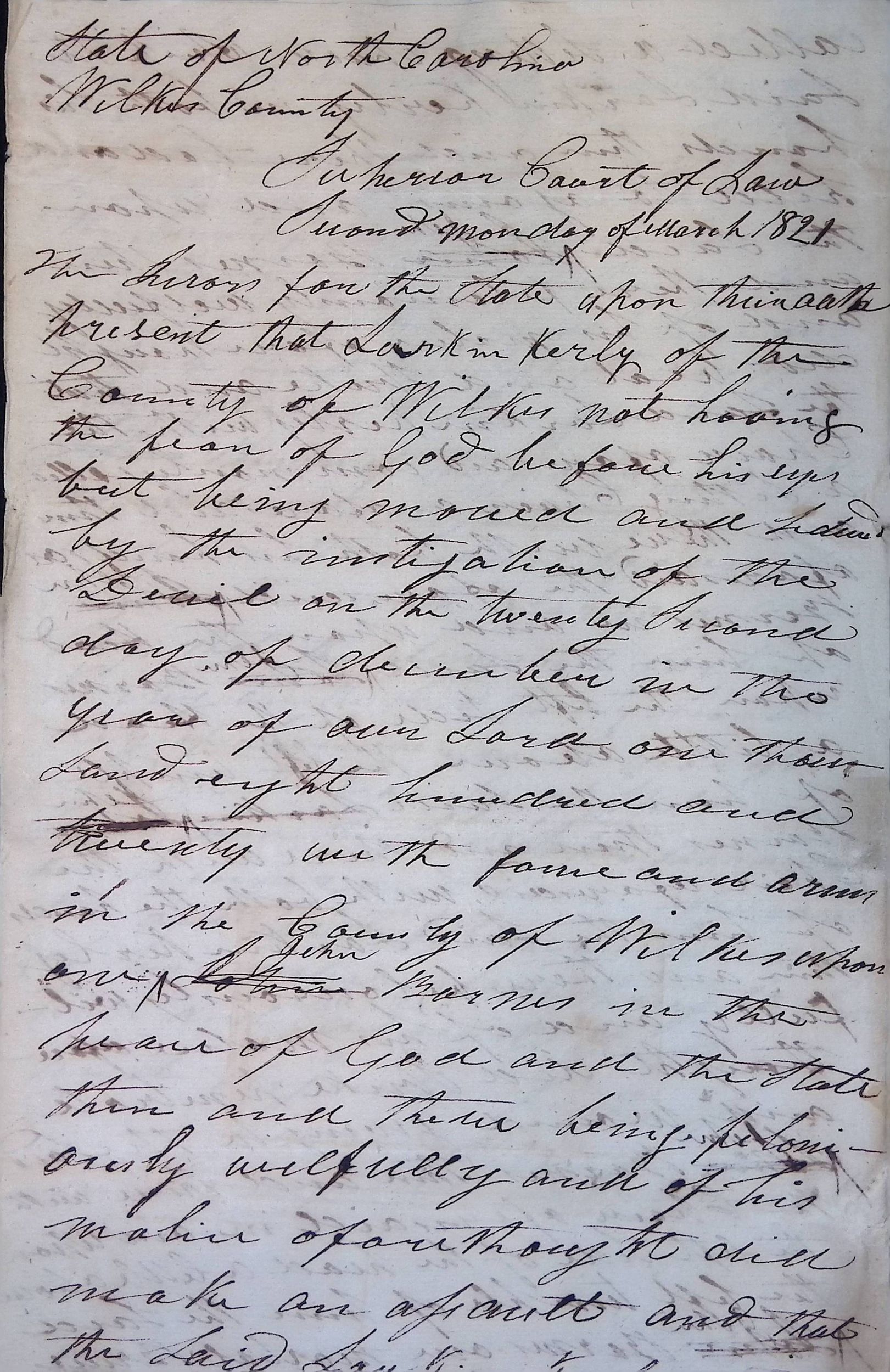
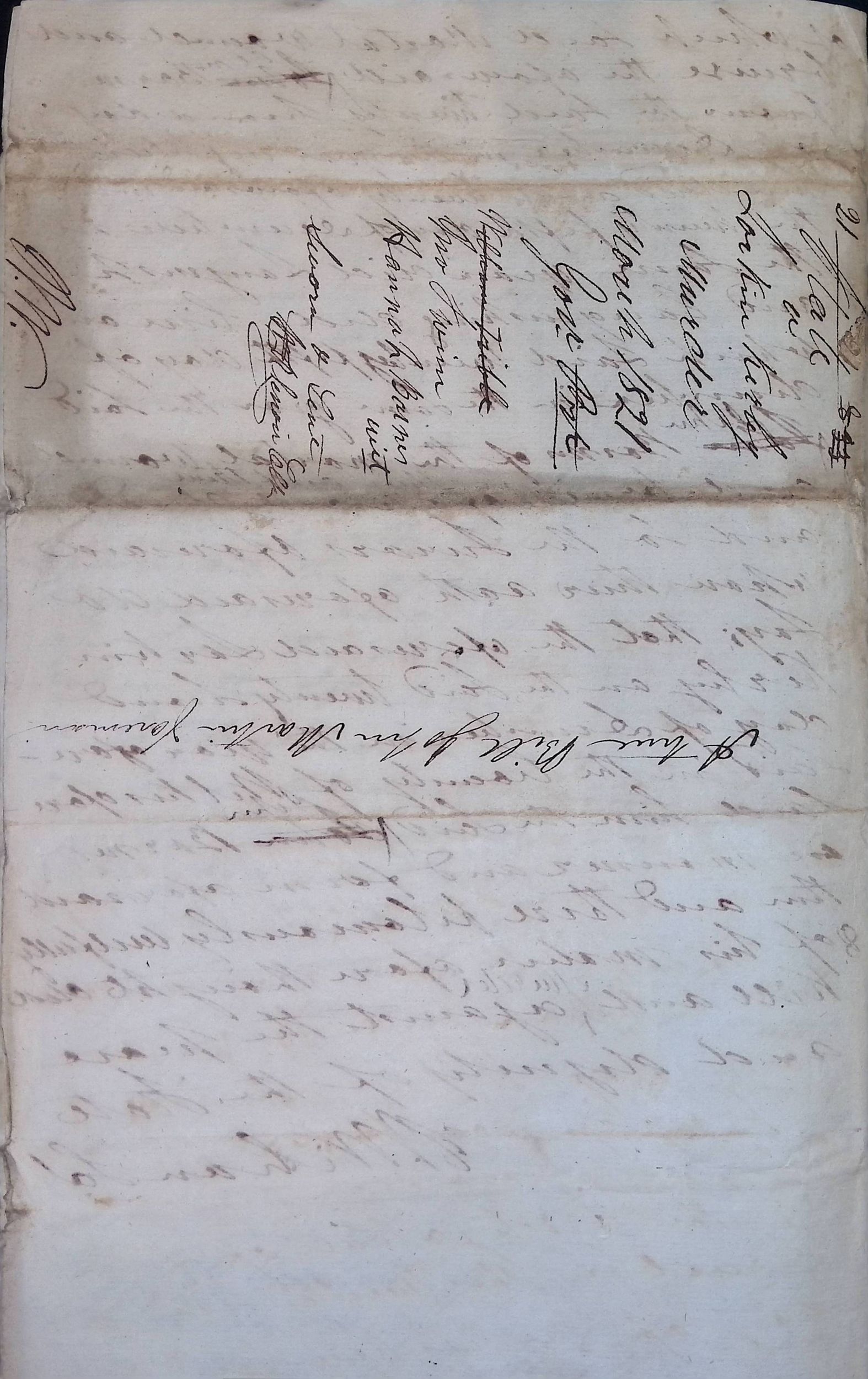
Murder Indictment: "A True Bill" (3 pages)
Grand jury indicts Larkin Kerly for first-degree murder. Formal legal language: "not having the fear of God before his eyes but being moved and seduced by the instigation of the Devil...with a certain...called a Setting Chair...did Strike penetrate and wound...one mortal Bruise." Verdict: "A True Bill" - Foreman John Martin. Solicitor A. Wilson. Cost: $44. Witnesses: Hannah Barnes, Jno Swaim.

[Page 1 - b10f01-0830.jpg]
State of North Carolina
Wilkes County
Superior Court of Law
Second monday of March 1821
The Jurors for the State upon their oath
present that Larkin Kerly of the
County of Wilkes not having
the fear of God before his eyes
but being moved and seduced
by the instigation of the
Devil on the twenty Second
day of December in the
year of our Lord one Thou
sand eight hundred and
twenty with force and arms
in the County of Wilkes upon
one John Barnes in the
peace of God and the State
then and there being feloni-
ously wilfully and of his
malice aforethought did
make an assault and that
the said Larkin Kerly with a certain
[Page 2 - b10f01-0831.jpg]
called a Setting Chair which the
said Larkin Kerly in both his
hands then and there had and
held to against and upon
the said John Barnes then
and there feloniously wilfully
and of his malice aforethought
did beat and Strike and that
the said Larkin Kerly with the
Chair aforesaid commonly called
a Setting Chair as aforesaid then
and there with both his hands as
aforesaid the aforesaid John
Barnes in and upon the Head
of him the said John Barnes
upon the left Side of the Head
a little above the left temple
of him the said John
Barnes then and there with the
Chair aforesaid with both the hands
of him the said Larkin Kerly
then and there feloniously wil-
fully and of his malice afore
thought did Strike penetrate
and wound giving to the said
John Barnes then and there with
the Chair aforesaid in and upon
the left side of the head a little above
the left temple of him the said
John Barnes one mortal Bruise
and wound of the length of
of which said Mortal wound and
bruise the aforesaid John Barnes
from the said twenty Second day
of December in the year eighteen
hundred and twenty aforesaid untill
the twenty fifth day of December in
the same year did Languish
and Languishing did live on
which said twenty fifth day of
December in the same year the said
John Barnes of the mortal wound
and bruise aforesaid there and there died.
and so the Jurors aforesaid
upon their oath aforesaid do
Say that the aforesaid Larkin
Kerly on the said twenty Second
day of December in the year afore-
said in the County of Wilkes afore-
said him the said John Barnes
in manner and form aforesaid
then and there feloniously wilfully
of his malice afore thought did
Kill and Murder against the peace
and dignity of the State
A. Wilson Sol
[Back - b10f01-0834.jpg]
21 State $44
vs
Larkin Kerly
Murder
March 1821
Geo. Reese
Nathaniel Fielder
Jno Swaim
Hannah Barnes
wit
Sworn & Sent
Jno Rousseau Exr
A True Bill John Martin Foreman
Commitment to Jail
Larkin Kerly ordered held without bail on first-degree murder charge. Justice John Swaim commands the jailer to receive and safely keep Kerly ("Miller Larkin") until discharged by due course of law. Twenty-four days after Jehu's death. He would remain in jail until his escape eight months later.
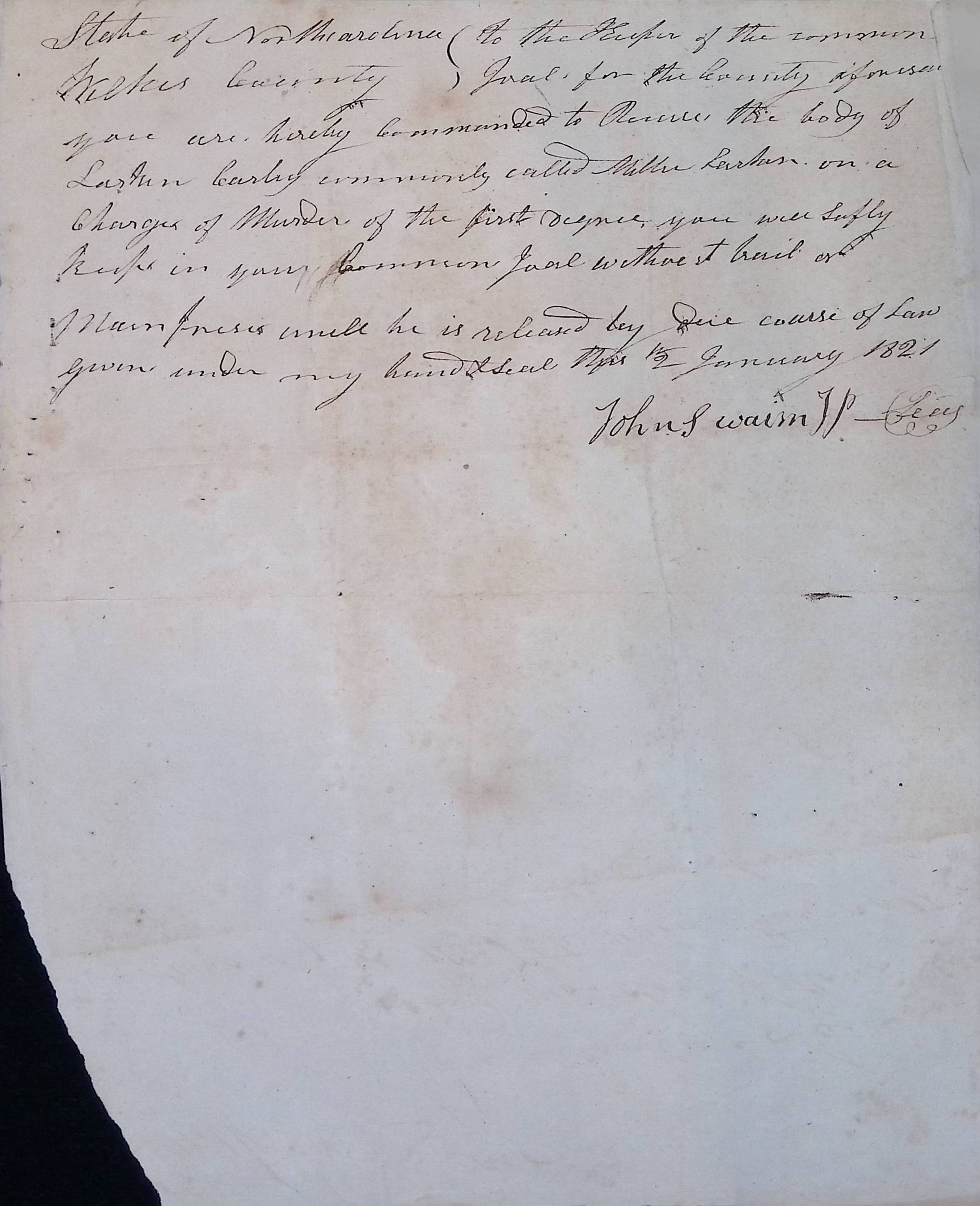
State of North Carolina
Wilkes County
To the Keeper of the common
Goal for the County aforesaid
You are hereby Commanded to Receive the body of
Larkin Kerly commonly called Miller Larkin on a
Charge of Murder of the first Degree you will Safly
Keep in your Common Goal without bail or
Mainprise untill he is released by Due course of Law
Given under my hand & Seal this 15th January 1821
John Swaim JP Seal
Escape & Aftermath: 1821
Kerly escapes, jailer indicted, threats continue
Escape from Jail Indictment
Larkin Kerly escapes from Wilkes County jail. Indictment charges Kerly with escape and Nathaniel Moore with aiding the escape. Kerly was never recaptured. He was never punished. Justice was never served.
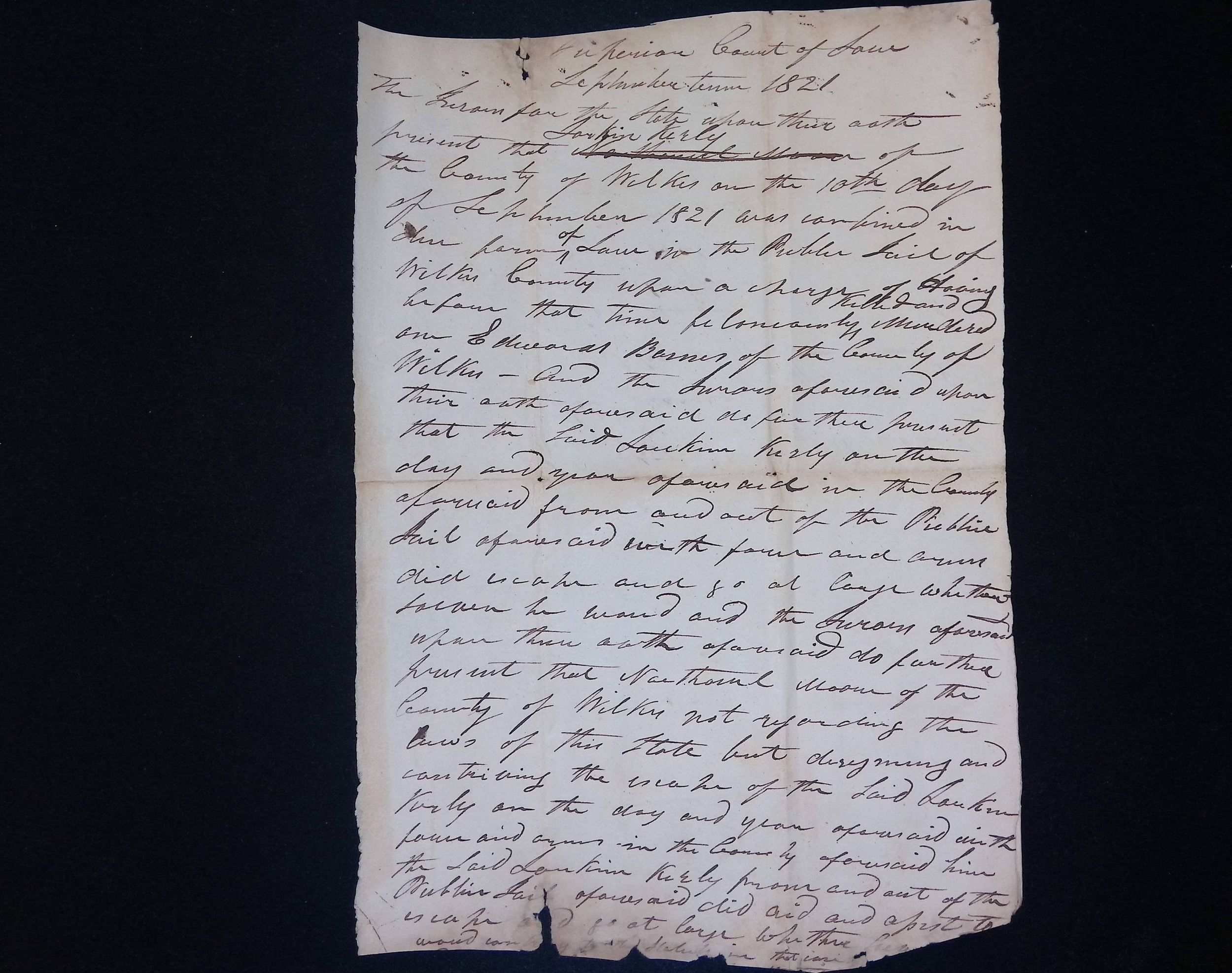
Superior Court of Law
September Term 1821.
The Jurors for the State upon their oath
present that Larkin Kerly
of the County of Wilkes on the 10th day
of September 1821 was confined in
the common Jail of Wilkes County upon a charge of Having
before that time feloniously Murdered
one Edward Barnes of the County of
Wilkes - And the Jurors aforesaid upon
their oath aforesaid do further present
that the said Larkin Kerly on the
day and year aforesaid in the County
aforesaid from and out of the Public
Jail aforesaid with force and arms
did escape and go at large wheresoever
he would and the Jurors aforesaid
upon their oath aforesaid do further
present that Nathaniel Moore of the
County of Wilkes not regarding the
laws of this State but desyning and
contriving the escape of the said Larkin
Kerly on the day and year aforesaid with
force and arms in the County aforesaid him
the said Larkin Kerly from and out of the
Public Jail aforesaid did aid and assist to
escape and go at large wheresoever he
would
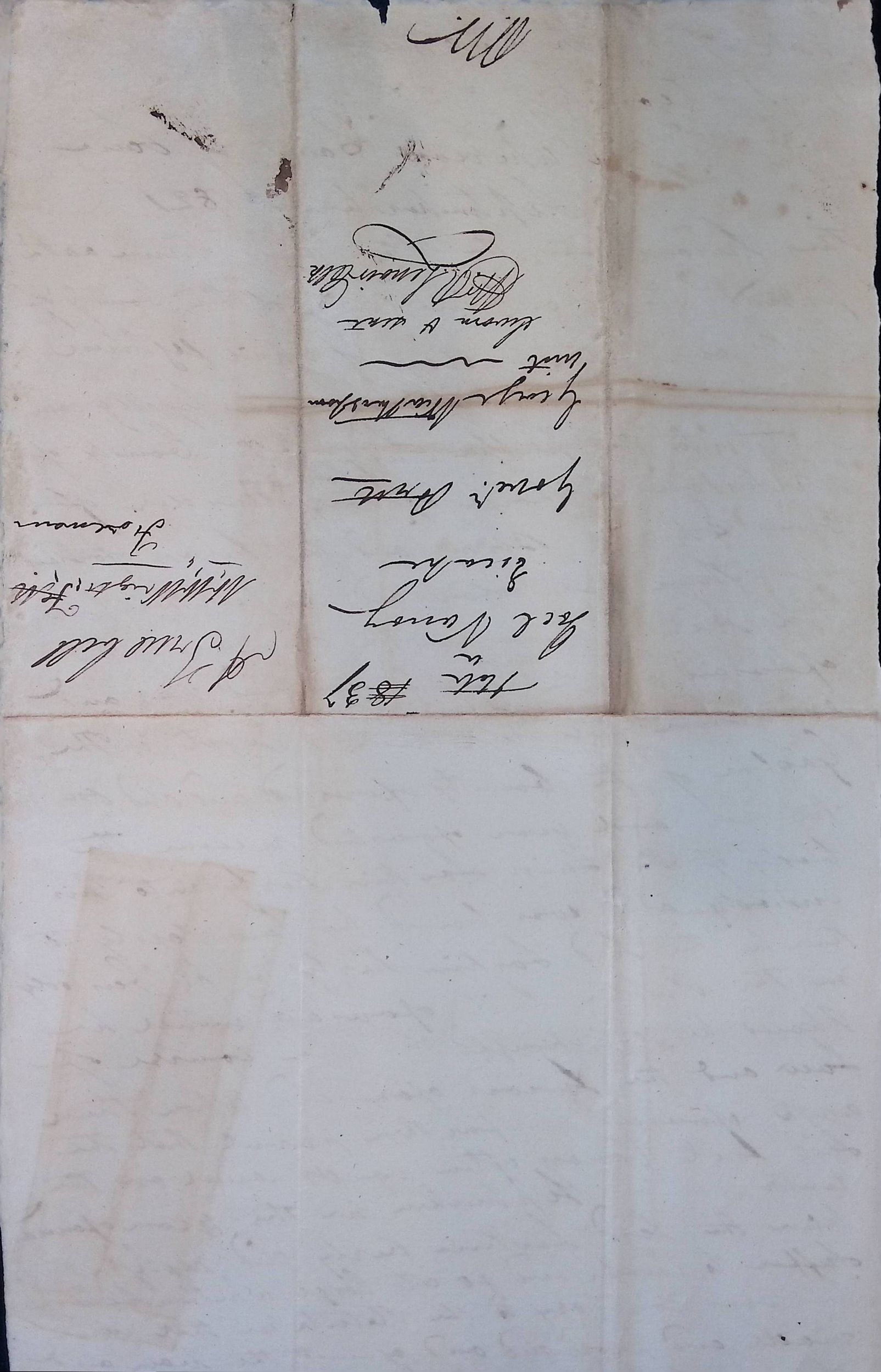
Jailer Indicted for Negligence (Front & Back)
Joel Vannoy, the jailer, charged with negligently allowing Kerly to escape. Verdict: "A True Bill" - Foreman W.W. Wright. The only successful prosecution connected to Jehu's murder was of the man who let the killer escape—not the murderer himself.
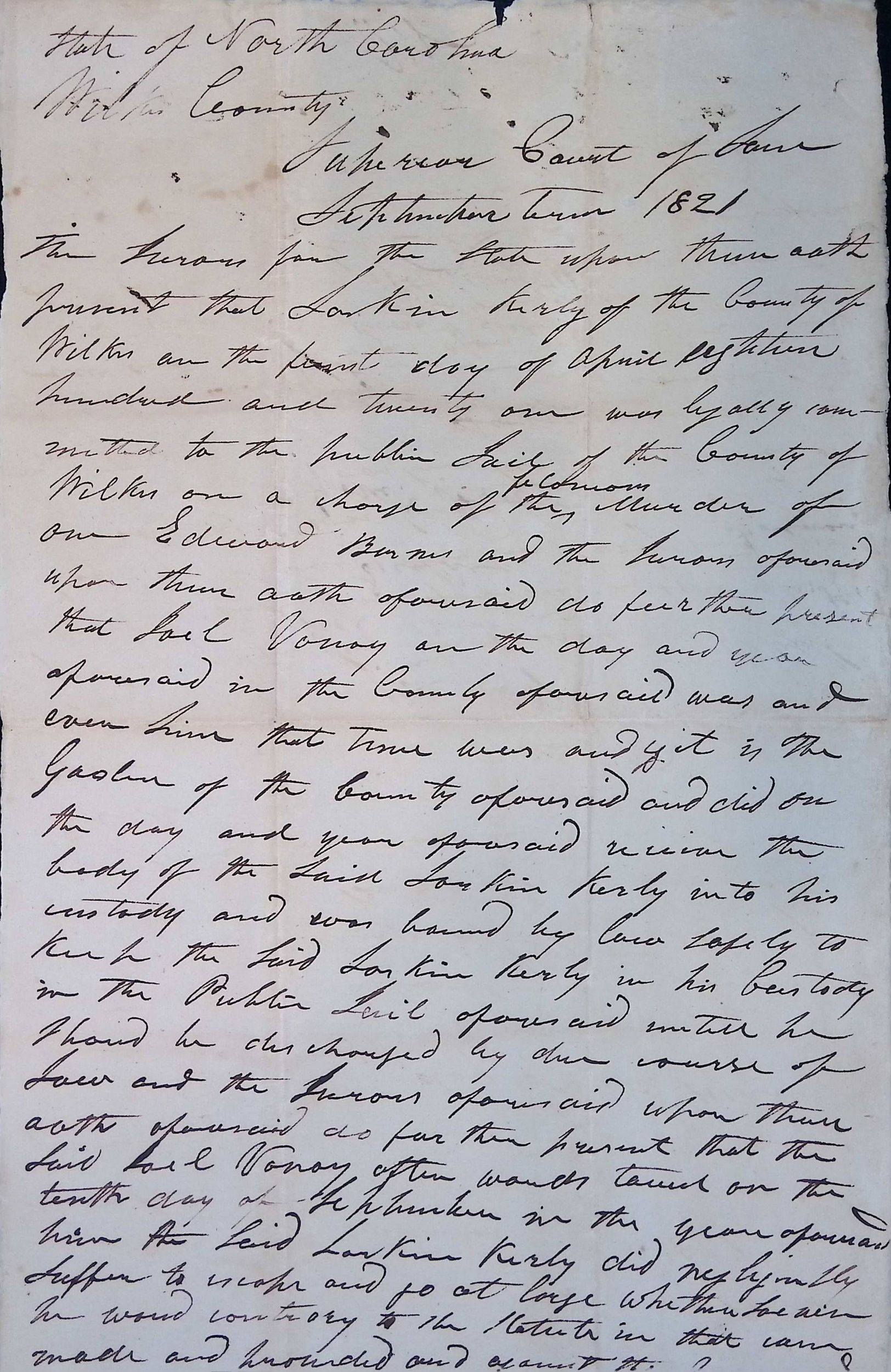
[Front - b10f01-0824.jpg]
State of North Carolina
Wilkes County
Superior Court of Law
September Term 1821
The Jurors for the State upon their oath
present that Larkin Kerly of the County of
Wilkes on the first day of April Eighteen
hundred and twenty one was legally com-
mitted to the public Jail of the County of
Wilkes on a charge of the felonious Murder of
one Edward Barnes and the Jurors aforesaid
upon their oath aforesaid do further present
that Joel Vannoy on the day and year
aforesaid in the County aforesaid was and
ever since that Time was and yet is the
Gaoler of the County aforesaid and did on
the day and year aforesaid receive the
body of the said Larkin Kerly into his
custody and was bound by law safely to
keep the said Larkin Kerly in his Custody
in the Public Jail aforesaid until he
should be discharged by due course of
Law and the Jurors aforesaid upon their
oath aforesaid do further present that the
said Joel Vannoy afterwards towit on the
tenth day of September in the year aforesaid
him the said Larkin Kerly did negligently
suffer to escape and go at large whithersoever
he would contrary to the Statute in that case
made and provided and against &c
[Back - b10f01-0825.jpg]
State #37
vs
Joel Vannoy
Escape
Geo. Reese
George McNeil Shff
wit
Sworn & sent
Jno Rousseau Exr
A True Bill
W. W. Wright
Foreman
Edward Barnes Peace Warrant - July 1821
Seven months after Jehu's murder, Edward Barnes swears a peace warrant. He fears Eley Perrey will "Kill or beate him...or Burn his House." Perrey has been "legning and Eave Droping" around his house. The Barnes family threats continue. The cycle of violence persists across generations.
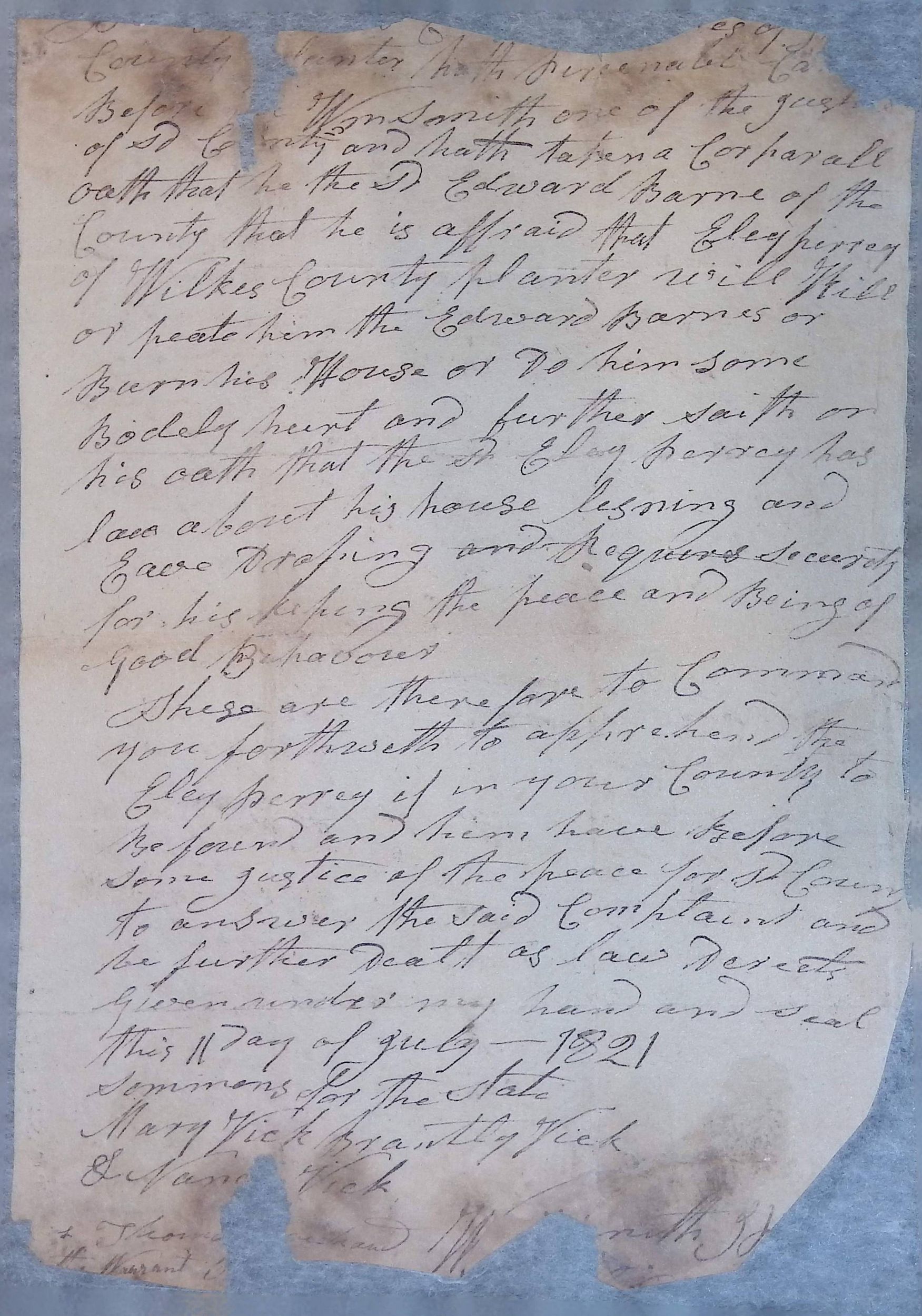
County... Before Wm Smith one of the just...
of Sd County and hath taken a Corparall
oath that he the Sd Edward Barne of the
County that he is affraid that Eley Perrey
of Wilkes County planter will Kill
or beate him the Edward Barnes or
Burn his House or Do him Some
Bodely hurt and further saith on
his oath that the Sd Eley Perrey has
lace about his house legning and
Eave Droping and Requires Securety
for his keeping the peace and Being of
Good Behavour
These are therefore to Command
you forthwith to apprehend the
Eley Perrey if in your County to
be found and him have Before
Some justice of the peace for Sd Coun
to answer the Said Complaint and
be further Dealt as law Derects
Given under my hand and seal
This 11 Day of July - 1821
Sommons for the State
Mary Vick Brantly Vick
& Jane Vick
To Thomas...
The Warrant
Wm Smith JP